
Global Sustainable Luxury Materials Market Roadmap to 2033
Global Sustainable Luxury Materials Market is segmented by Application (Fashion, Automotive, Interior Design, Furniture, Packaging), Type (Recycled Fabrics, Eco-Friendly Leathers, Biodegradable Plastics, Organic Cotton, Hemp Fabrics), and Geography (North America, LATAM, West Europe, Central & Eastern Europe, Northern Europe, Southern Europe, East Asia, Southeast Asia, South Asia, Central Asia, Oceania, MEA)
Pricing
Report Overview
Industry Overview
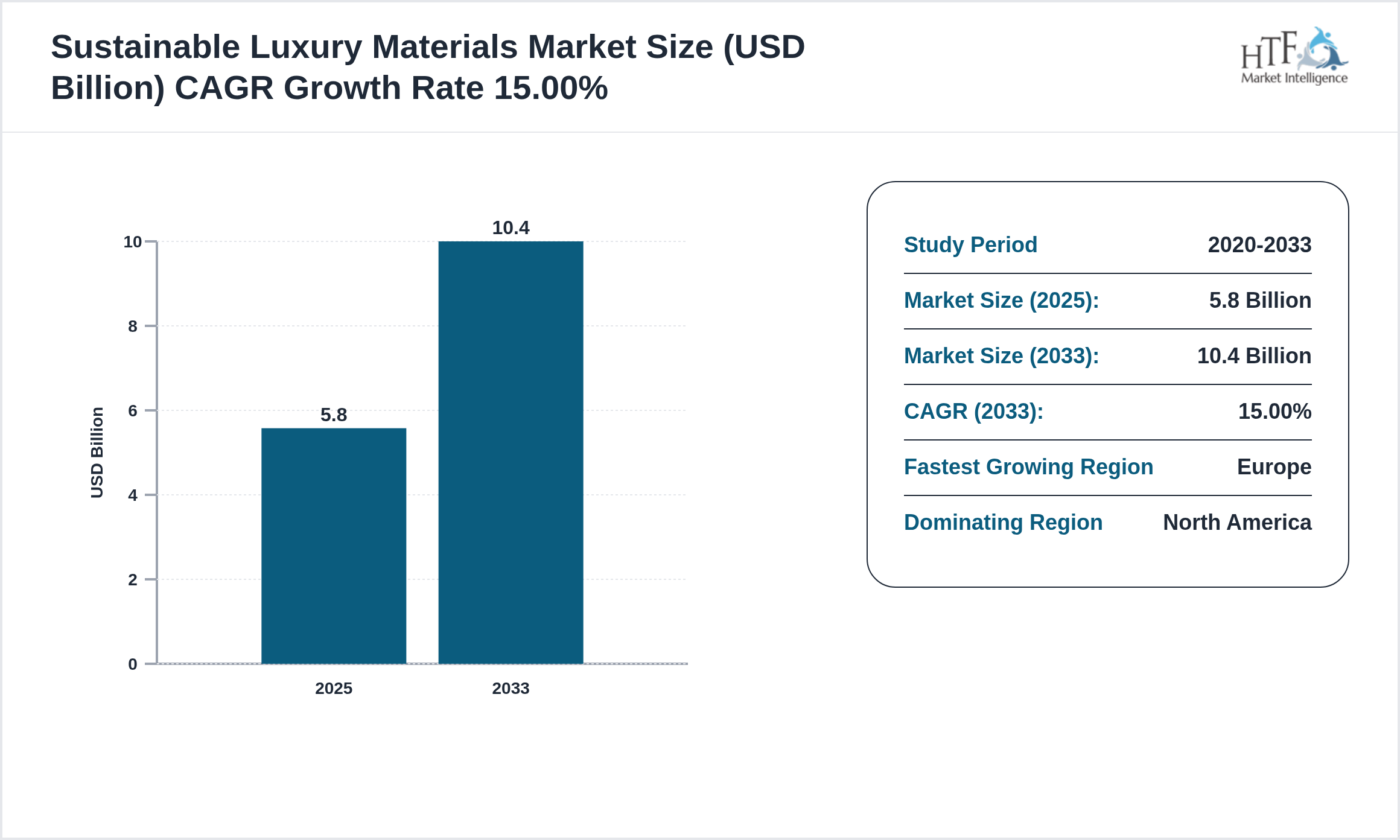
The Sustainable Luxury Materials is at USD 5.8 Billion in 2025 and is expected to reach 10.4 Billion by 2033. The Sustainable Luxury Materials is driven by increasing demand in end-use industries, technological advancements, research and development (R&D), economic growth, and global trade.
The sustainable luxury materials market focuses on materials used in the production of high-end products that minimize environmental impact. As luxury consumers become more eco-conscious, there is increasing demand for sustainable fabrics, plant-based leathers, and recycled materials. The market is expanding with innovations in biodegradable materials, alternative fabrics, and eco-friendly manufacturing processes in fashion, automotive, and other luxury sectors.
Source: HTF Market Intelligence (HTF MI)
Competitive landscape
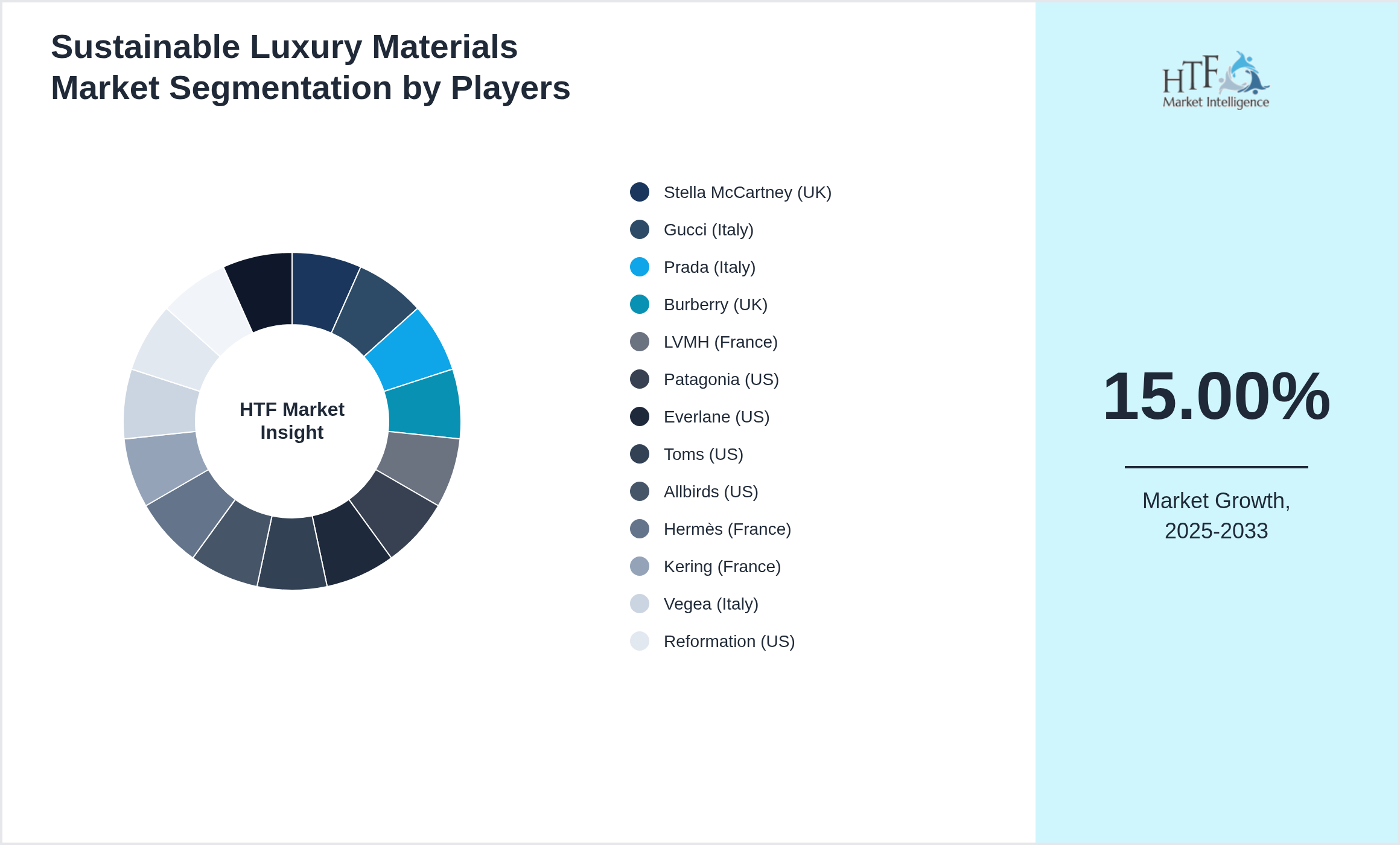
The companies highlighted in this profile were selected based on insights from primary experts and an evaluation of their market penetration, product offerings, and geographical reach:
- • Stella McCartney (UK)
- • Gucci (Italy)
- • Prada (Italy)
- • Burberry (UK)
- • LVMH (France)
- • Patagonia (US)
- • Everlane (US)
- • Toms (US)
- • Allbirds (US)
- • Hermès (France)
- • Kering (France)
- • Vegea (Italy)
- • Reformation (US)
- • Timberland (US)
- • The North Face (US)
What are the Key Growth Drivers of the Sustainable Luxury Materials Market?
What Risks could Impact the future of the Sustainable Luxury Materials Market?
What Untapped Segments of Sustainable Luxury Materials Market offer the Greatest Growth Potential?
What are the Key Trends in Sustainable Luxury Materials Market to Watch through 2033?
Regulatory Framework
- • Regulations focus on sourcing sustainable materials and reducing environmental impact. There are increasing incentives for using recycled and organic materials in the luxury sector
Regional Insight
The North America leads the market share, largely due to rising consumption, a growing population, and strong economic momentum that boosts demand. In contrast, the Europe is emerging as the fastest-growing area, driven by rapid infrastructure development, the expansion of industrial sectors, and heightened consumer demand, making it a critical factor for future market growth. The regions covered in the report are
- North America
- LATAM
- West Europe
- Central & Eastern Europe
- Northern Europe
- Southern Europe
- East Asia
- Southeast Asia
- South Asia
- Central Asia
- Oceania
- MEA
Regional Analysis
- • Strong interest in North America
Market Segmentation
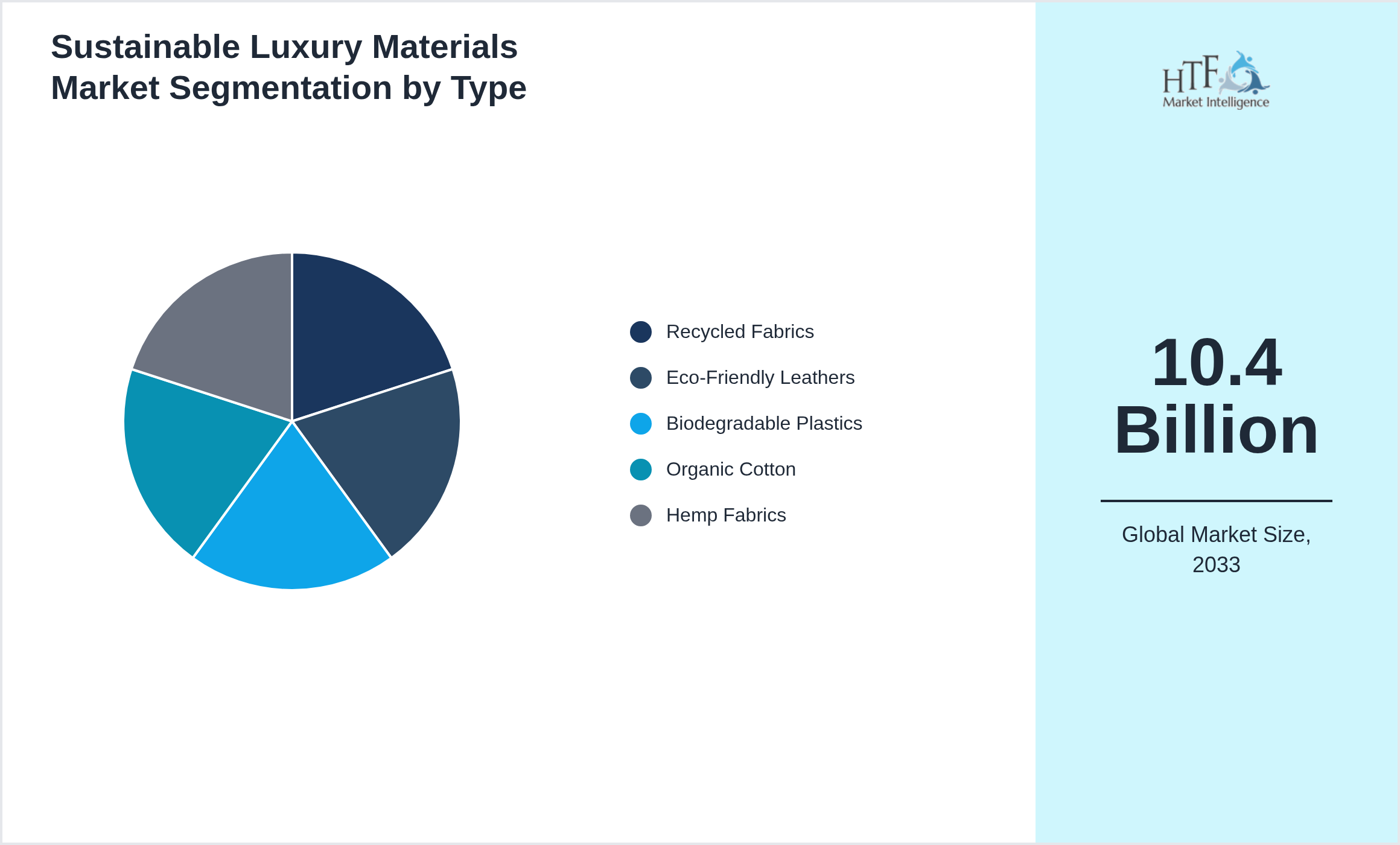
Segmentation by Type
- • Recycled Fabrics
- • Eco-Friendly Leathers
- • Biodegradable Plastics
- • Organic Cotton
- • Hemp Fabrics
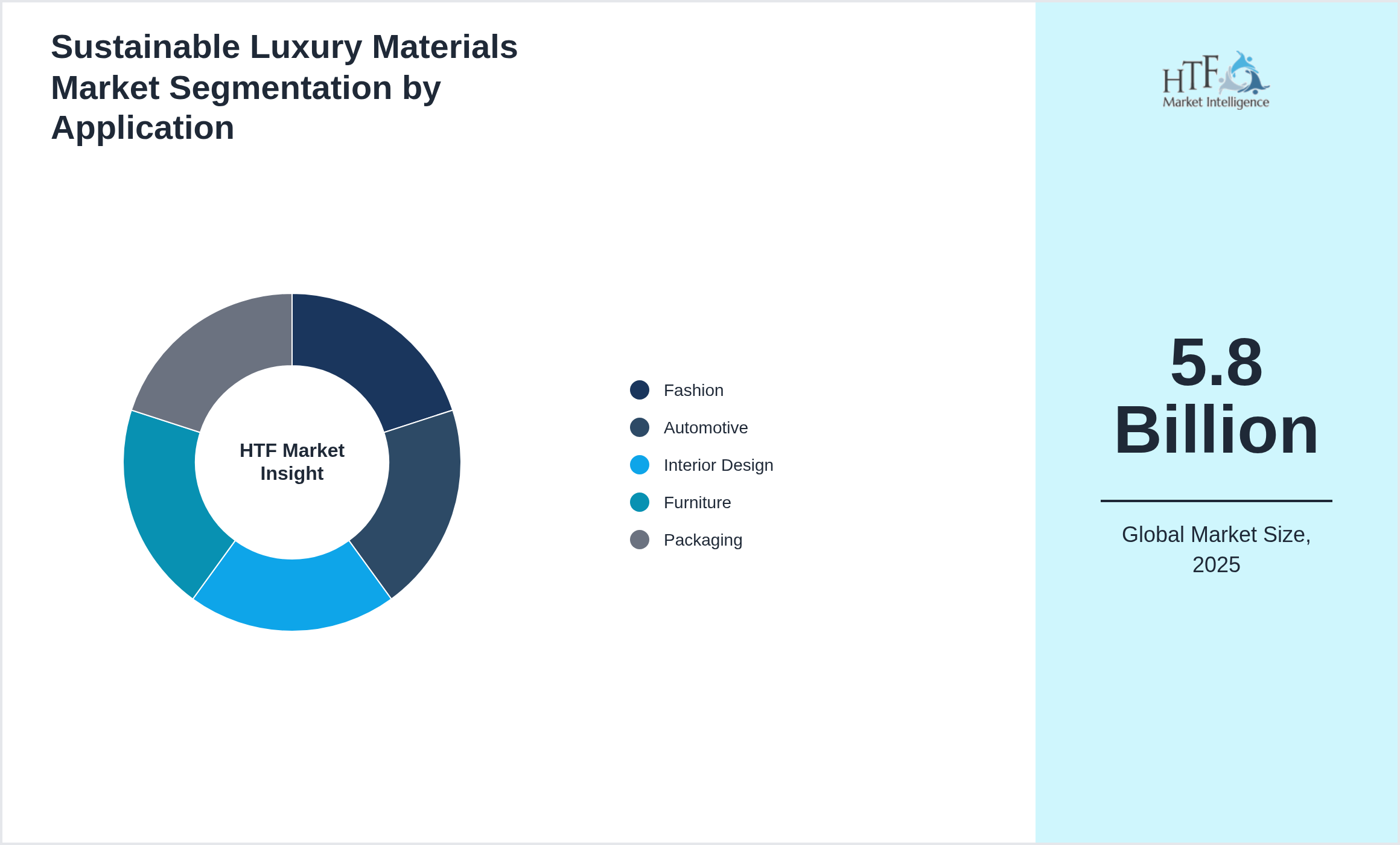
Segmentation by Application
- • Fashion
- • Automotive
- • Interior Design
- • Furniture
- • Packaging
Key Development Activities
Market Entropy
- • June 2024 – Gucci and Hermès introduced luxury products made from sustainably sourced materials like mushroom leather and organic cotton
Merger & Acquisition
- • April
Regulatory Landscape
- • Regulations focus on sourcing sustainable materials and reducing environmental impact. There are increasing incentives for using recycled and organic materials in the luxury sector
Patent Analysis
- • Patents focus on the use of sustainable materials in high-end products
Investment and Funding Scenario
- • Investment in sustainable luxury materials is rising
Report Details
| Report Features | Details |
| Base Year | 2025 |
| Based Year Market Size (2025) | 5.8 Billion |
| Historical Period | 2020 to 2025 |
| CAGR (2025 to 2033) | 15.00% |
| Forecast Period | 2026 to 2033 |
| Forecasted Period Market Size (2033) | 10.4 Billion |
| Scope of the Report | Recycled Fabrics, Eco-Friendly Leathers, Biodegradable Plastics, Organic Cotton, Hemp Fabrics, Fashion, Automotive, Interior Design, Furniture, Packaging |
| Companies Covered | Stella McCartney (UK), Gucci (Italy), Prada (Italy), Burberry (UK), LVMH (France), Patagonia (US), Everlane (US), Toms (US), Allbirds (US), Hermès (France), Kering (France), Vegea (Italy), Reformation (US), Timberland (US), The North Face (US) |
| Customization Scope | 15% Free Customization |
| Delivery Format | PDF and Excel through Email |
Research Methodology
The research methodology involves several key steps to ensure comprehensive and accurate insights. First, the objectives of the research are clearly defined, focusing on aspects such as market size, growth trends, and competitive dynamics. Data collection is conducted through both primary and secondary methods. Primary research includes interviews with industry experts, surveys, and focus groups to gather firsthand information, while secondary research involves analyzing existing reports, government publications, and company filings.
The collected data is then subjected to rigorous analysis, with quantitative methods used to evaluate market size and trends and qualitative methods applied to understand industry dynamics and consumer behavior. Findings are compiled into a detailed report featuring key insights, data visualizations, and strategic recommendations. Validation is achieved through data verification and peer reviews to ensure accuracy.
Finally, the research concludes with actionable insights and recommendations, along with suggestions for future studies to address emerging trends and gaps. This methodology provides a structured approach to understanding the {keywords} and guiding strategic decisions.
Multidisciplinary researcher with 10+ years of experience uncovering insights across diverse domains focused on uncovering insights that drive informed decisions.