
Global Inflight Entertainment Center (IFEC) Market Size, Growth & Revenue 2024-2033
Global Inflight Entertainment Center (IFEC) Market is segmented by Application (Commercial aircraft, Business jets, Long-haul flights, Premium cabins, Low-cost carriers), Type (Seatback, Wireless, Portable, Hybrid, Cloud-based), and Geography (North America, LATAM, West Europe, Central & Eastern Europe, Northern Europe, Southern Europe, East Asia, Southeast Asia, South Asia, Central Asia, Oceania, MEA)
Pricing
Report Overview
Industry Overview
The Inflight Entertainment Center (IFEC) market is expected to reach 14.8 billion by 2033 and is growing at a CAGR of10.00% between 2024 and 2033.
Inflight Entertainment Center (IFEC) refers to integrated aviation entertainment and passenger engagement systems designed to deliver multimedia content, connectivity services, digital communication, e-commerce functionality, and personalized travel experiences within commercial and private aircraft cabins. These systems combine digital content servers, high-resolution display units, wireless streaming technologies, cloud-based entertainment platforms, AI-powered passenger analytics, and integrated communication networks to enhance inflight customer satisfaction and airline service differentiation. The market includes seatback entertainment systems, wireless entertainment platforms, onboard digital commerce systems, inflight streaming services, satellite-enabled communication infrastructure, and intelligent passenger engagement ecosystems deployed across commercial aviation and luxury travel segments. Increasing airline competition, rising passenger expectations for connected travel experiences, expansion of premium cabin services, and digital transformation within the aviation industry are accelerating global demand for advanced IFEC solutions. Manufacturers are integrating AI-based content personalization, predictive passenger analytics, cloud-enabled media delivery, real-time language translation, and cybersecurity-enhanced digital infrastructure to improve engagement and operational performance. Growth of connected aircraft ecosystems and next-generation aviation digitalization strategies is further supporting scalability, revenue optimization, and long-term innovation across global airline operations.
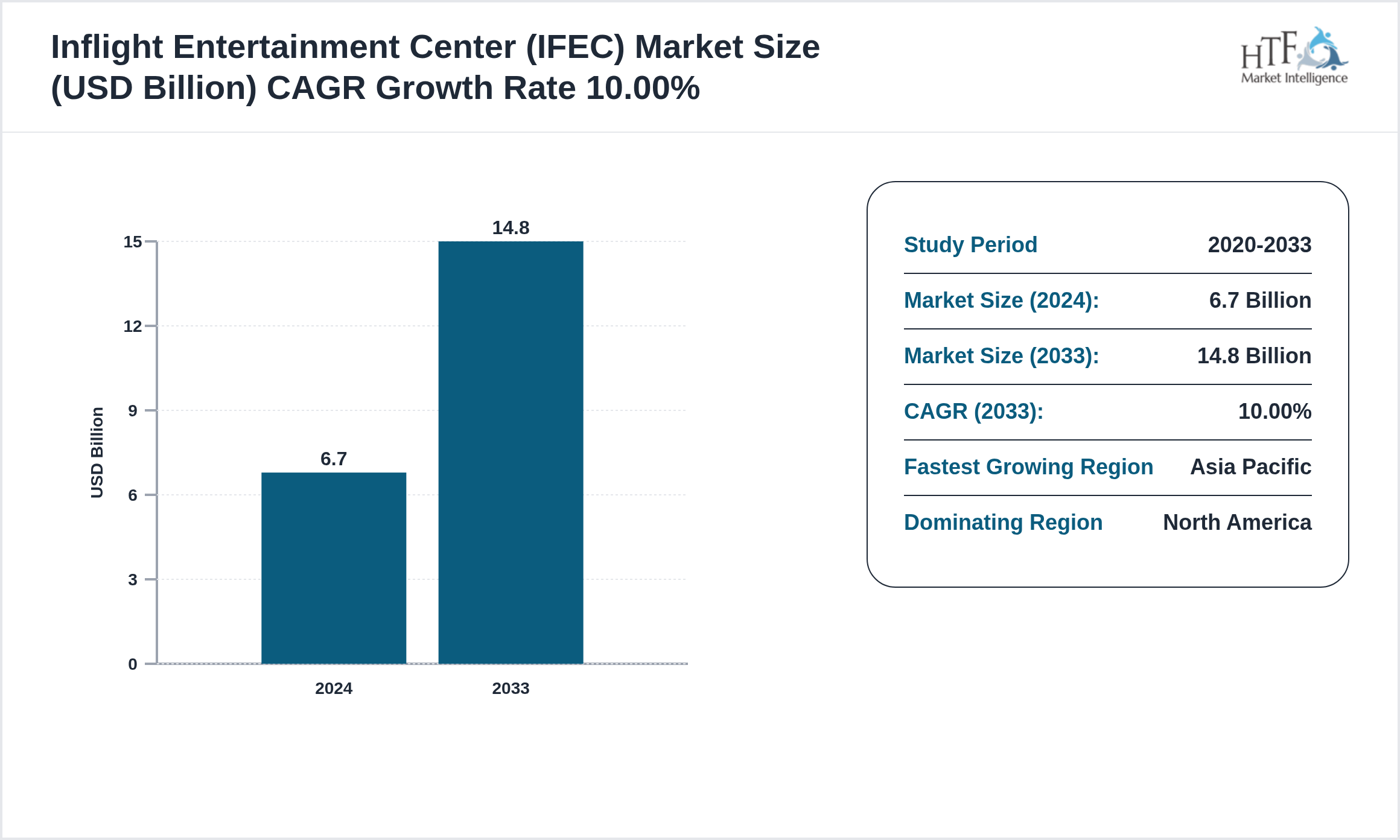
Source: HTF Market Intelligence (HTF MI)
Market Size & Forecast
Market Segmentation
Selecting segmentation criteria in Panasonic Avionics (US), Thales (France), Collins Aerospace (US), Safran (France), Astronics (US), Lufthansa Technik (Germany), Viasat (US), Rockwell Collins (US), Honeywell (US), Burrana (Australia), AVIC Cabin Systems (China), Diehl Aviation (Germany), JAMCO (Japan), Zodiac Aerospace (France), Global Eagle (US) involves several key steps. Researchers begin by defining their objectives, such as understanding consumer behavior or identifying market opportunities. They then gather relevant data on demographics, psychographics, and buying behavior. Next, they identify segmentation variables like age, location, lifestyle, and purchase patterns. Using analytical tools, they analyze the data to find distinct market segments and evaluate their attractiveness based on size, growth potential, and alignment with business goals. Detailed profiles are created for each segment, and the most promising ones are selected for targeting. Finally, tailored marketing strategies are developed, and the performance of these strategies is monitored and adjusted as needed. This process ensures that segmentation effectively identifies valuable market opportunities and aligns with strategic goals.
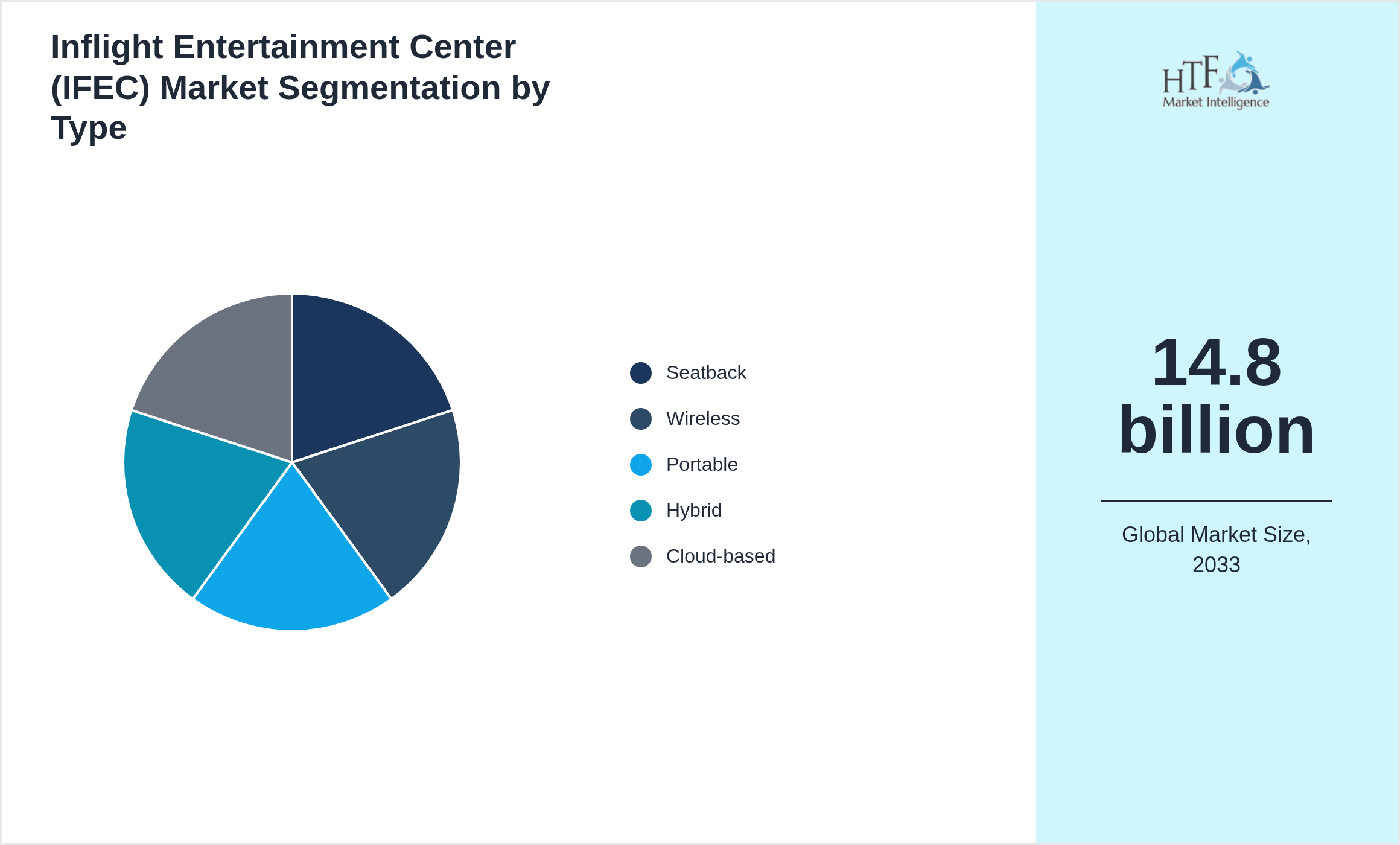
Segmentation by Type
- • Seatback
- • Wireless
- • Portable
- • Hybrid
- • Cloud-based
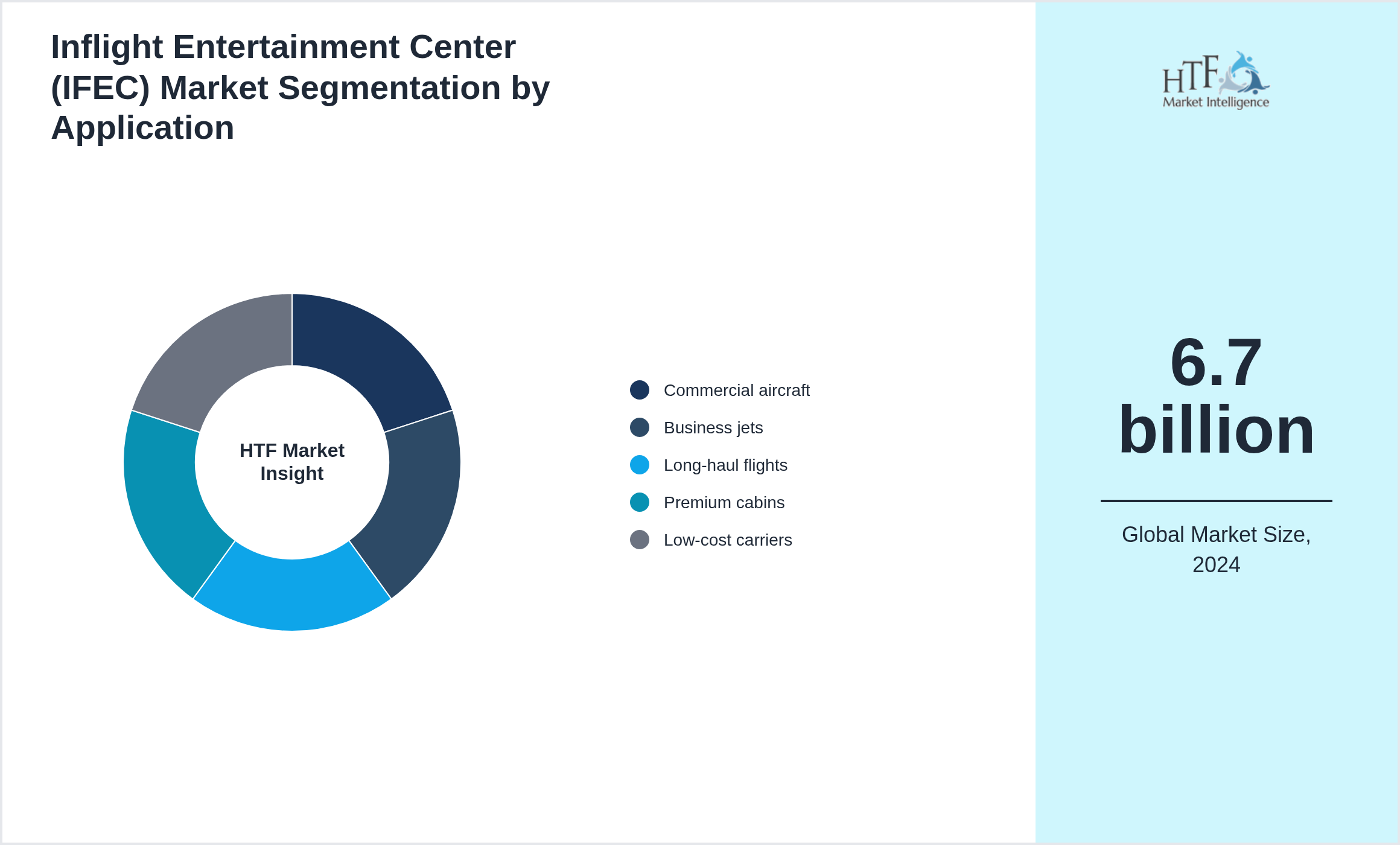
Segmentation by Application
- • Commercial aircraft
- • Business jets
- • Long-haul flights
- • Premium cabins
- • Low-cost carriers
Inflight Entertainment Center (IFEC) Market Dynamics
TheInflight Entertainment Center (IFEC) is driven by factors such as increasing demand in end-use industries, technological advancements, research and development (R&D), economic growth, and increasing global trade.
Influencing Trend:
- • Wireless entertainment platforms cloud-based content delivery and AI-driven passenger personalization are major trends reshaping the inflight entertainment center market. Airlines increasingly replace legacy seatback systems with lightweight wireless streaming solutions to reduce aircraft weight and fuel consumption. Integration of e-commerce live television and real-time travel information services continues expanding across connected cabin ecosystems. Voice-controlled interfaces touchscreen enhancements and multilingual content personalization improve passenger engagement while predictive analytics help airlines optimize content strategies and operational efficiency
- • Increasing passenger expectations for premium digital entertainment and connected travel experiences strongly drive the inflight entertainment center market. Airlines increasingly adopt advanced IFEC systems to enhance customer satisfaction brand differentiation and passenger retention across long-haul and premium travel segments. Growth in global air travel expansion of wide-body aircraft fleets and rising demand for personalized onboard services further support market expansion. Integration of streaming content gaming platforms and multilingual entertainment options also strengthens adoption of modern IFEC systems globally
- • High capital investment requirements and long aircraft certification cycles create major operational challenges within the IFEC market. Rapid technological obsolescence and changing passenger content preferences increase upgrade and maintenance complexity significantly. Bandwidth limitations and inconsistent inflight connectivity affect streaming quality and passenger experience. Cybersecurity risks associated with connected entertainment platforms and onboard data systems create growing compliance concerns. Intense competition from personal mobile devices and bring-your-own-device entertainment models also pressure traditional IFEC hardware demand and profitability
- • Rapid fleet modernization growth in premium air travel and increasing demand for digital passenger engagement create strong opportunities for IFEC system providers. Emerging aviation markets and expansion of low-cost long-haul carriers support rising adoption of cost-efficient wireless entertainment solutions. Technological advancements in cloud computing satellite connectivity and immersive media platforms enable development of next-generation IFEC ecosystems. Strategic partnerships with streaming companies gaming providers and digital advertisers further strengthen recurring revenue opportunities. Integration of targeted advertising onboard shopping and passenger analytics also provides additional monetization potential for airlines and technology suppliers
Regional Insight
The North Americaregion holds a dominant market share, primarily driven by growing consumption patterns, a rising population, and robust economic activity that fuels market demand. Meanwhile, the Asia Pacific Region is experiencing the fastest growth, propelled by increasing infrastructure developments, expanding industrial activities, and a surge in consumer demand, positioning it as a key driver for future market expansion.
- North America
- LATAM
- West Europe
- Central & Eastern Europe
- Northern Europe
- Southern Europe
- East Asia
- Southeast Asia
- South Asia
- Central Asia
- Oceania
- MEA
- • North America dominates the Inflight Entertainment Center (IFEC) market through large commercial airline fleets premium passenger service expectations and strong investments in digital cabin technologies. Airlines continue deploying cloud-enabled entertainment systems 4K display platforms and personalized content streaming services to improve customer engagement and brand loyalty. Technological partnerships between aerospace OEMs software developers and communication providers continue accelerating cabin digitization initiatives across domestic and international fleets
- • Europe maintains strong IFEC adoption supported by premium airline operators and technologically advanced aviation ecosystems. Regional carriers increasingly invest in integrated cabin management systems multilingual content platforms and real-time passenger engagement technologies. Sustainability initiatives encouraging lightweight aircraft components and energy-efficient onboard systems continue influencing IFEC hardware innovation and fleet upgrade strategies across the aviation sector
- • Asia Pacific represents the fastest-growing IFEC market due to rapid airline expansion increasing middle-class air travel and growing passenger preference for digitally connected travel experiences. China India and Southeast Asian countries continue witnessing large aircraft procurement programs and modernization of onboard entertainment infrastructure. Regional airlines increasingly integrate wireless entertainment systems mobile device compatibility and e-commerce-enabled cabin services to improve operational competitiveness and passenger satisfaction
- • Middle East airlines remain global leaders in premium inflight entertainment deployment due to strong investments in luxury aviation experiences and long-haul international connectivity. Gulf carriers continue introducing advanced entertainment screens immersive passenger interfaces and multilingual content ecosystems to strengthen customer loyalty and maintain premium airline positioning in global aviation markets
Key Players
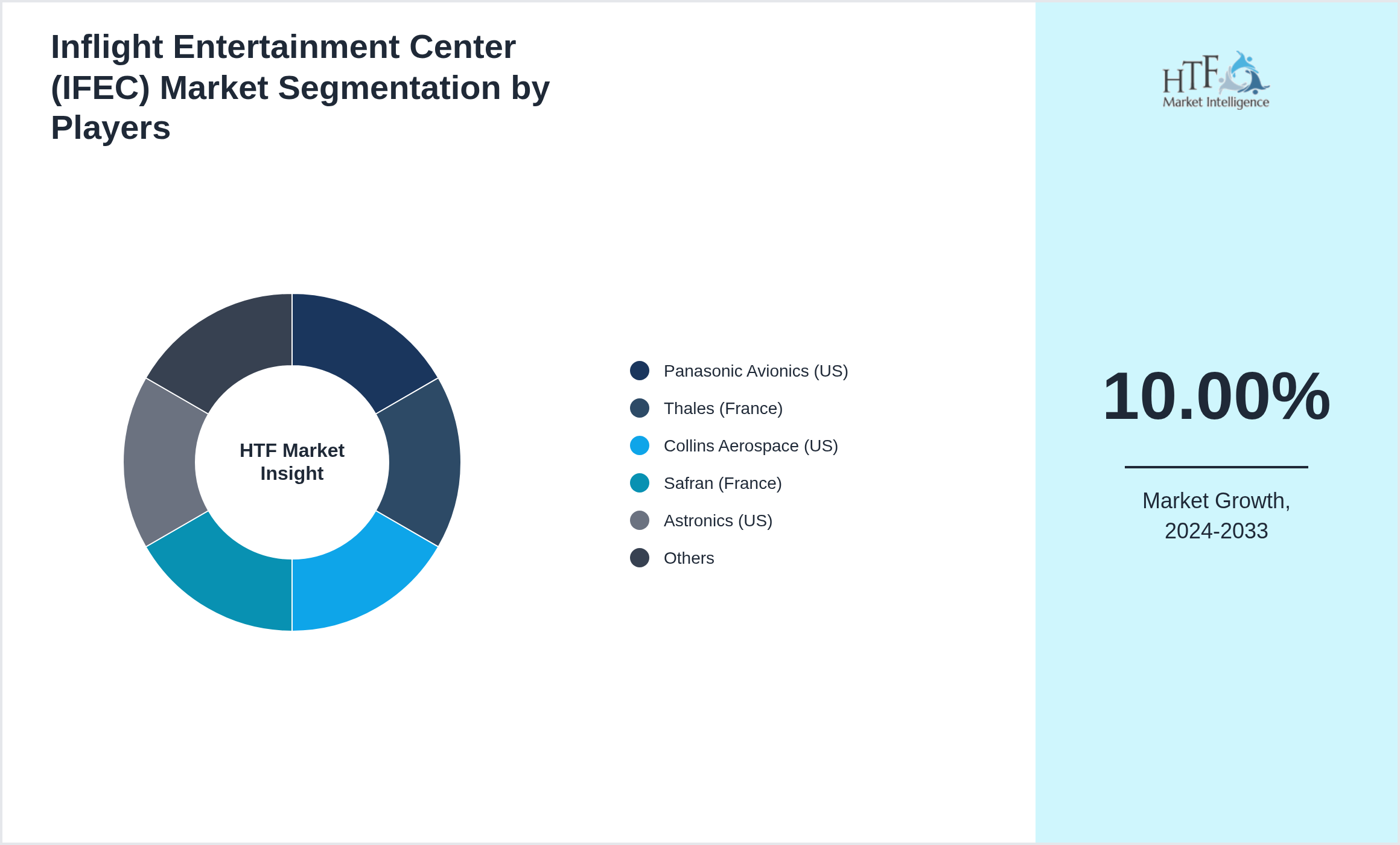
The companies highlighted in this profile were selected based on insights from primary experts and an evaluation of their market penetration, product offerings, and geographical reach:
- • Panasonic Avionics (US)
- • Thales (France)
- • Collins Aerospace (US)
- • Safran (France)
- • Astronics (US)
- • Lufthansa Technik (Germany)
- • Viasat (US)
- • Rockwell Collins (US)
- • Honeywell (US)
- • Burrana (Australia)
- • AVIC Cabin Systems (China)
- • Diehl Aviation (Germany)
- • JAMCO (Japan)
- • Zodiac Aerospace (France)
- • Global Eagle (US)
Regulatory Framework
The regulatory framework for the Inflight Entertainment Center (IFEC) ensures product safety, fair competition, and consumer protection. It encompasses setting standards for product quality and safety, enforcing truthful advertising and labeling, and implementing environmental sustainability practices. Regulations include robust procedures for product recalls, data protection, and anti-competitive practices, while also overseeing import/export controls and intellectual property rights. Regulatory bodies enforce these rules through inspections and penalties, and consumer education programs help individuals make informed decisions. This framework aims to protect consumers, promote fair market conditions, and encourage ethical business practices.
- • The Inflight Entertainment Center (IFEC) market operates within a highly regulated aviation ecosystem where passenger safety digital content licensing electronic hardware certification and environmental compliance significantly shape commercial operations. Aircraft cabin systems must comply with rigorous aerospace standards concerning flammability vibration resistance electromagnetic interference and cybersecurity protocols before deployment in commercial fleets. Environmental regulations encouraging fuel efficiency are accelerating the adoption of lightweight and modular IFEC systems replacing older bulky infrastructure that increases aircraft operating weight and fuel expenditure. Intellectual property regulations and digital licensing agreements for movies streaming platforms and gaming content also affect operational costs and cross-border service delivery. Supply chain dependency on semiconductors display panels and aircraft-grade electronic components exposes manufacturers to cost inflation pressures and production delays. Airlines increasingly favor wireless BYOD-based entertainment models as substitutes for seatback-heavy systems influencing capital expenditure strategies and long-term profitability. Investment opportunities remain attractive due to growing premium passenger expectations but regulatory certification timelines and aircraft retrofit complexities continue to influence production scalability and market expansion without full stop
Competitive Insights
The key players in the Inflight Entertainment Center (IFEC) are intensifying their focus on research and development (R&D) activities to innovate and stay competitive. Major companies, such as Panasonic Avionics (US), Thales (France), Collins Aerospace (US), Safran (France), Astronics (US), Lufthansa Technik (Germany), Viasat (US), Rockwell Collins (US), Honeywell (US), Burrana (Australia), AVIC Cabin Systems (China), Diehl Aviation (Germany), JAMCO (Japan), Zodiac Aerospace (France), Global Eagle (US), are heavily investing in R&D to develop new products and improve existing ones. This strategic emphasis on innovation is driving significant advancements in product formulation and the introduction of sustainable and eco-friendly products.
In addition to R&D and acquisitions, there is a notable shift towards green investments among key players in the consumer goods industry. Companies are increasingly committing resources to sustainable practices and the development of environmentally friendly products. This green investment is in response to growing consumer demand for sustainable solutions and stringent environmental regulations. By prioritizing sustainability, these companies are not only contributing to environmental protection but also positioning themselves as leaders in the green movement, thereby fueling market growth.
Merger Acquisition
- • Mar 2026 – A major aviation electronics company completed the acquisition of a cabin entertainment software developer to strengthen its inflight entertainment center platform offerings. The acquisition focused on cloud-based media streaming systems multilingual content management and passenger engagement analytics. The acquiring company announced plans to integrate AI-driven recommendation systems and personalized digital advertising capabilities into airline entertainment platforms. In Jul 2026 a global airline alliance partnered with an aerospace connectivity provider to jointly modernize onboard entertainment infrastructure across multiple international fleets. Several regional IFEC suppliers also pursued strategic mergers to improve hardware compatibility and reduce system maintenance costs. These developments are expected to intensify competition in connected cabin experiences and next-generation passenger engagement technologies
Patent Analysis
- • Inflight Entertainment Center (IFEC) companies actively pursue patents involving immersive cabin entertainment systems wireless streaming technologies interactive seatback displays AI-based passenger personalization engines and integrated cabin connectivity platforms supporting next-generation airline experiences. Patent innovation increasingly targets cloud-connected media systems touchscreen optimization multilingual content delivery architectures and real-time passenger analytics designed to improve airline customer engagement and ancillary revenue generation. Trademark activity supports branding of premium IFEC ecosystems cabin digital experience platforms and integrated airline content management services. Digital copyright protections remain critical for licensed entertainment libraries proprietary user interface designs streaming platforms gaming applications and digital advertising systems used within connected aircraft environments. Industry players also strengthen cybersecurity and content rights management systems to protect digital entertainment assets and passenger data across global airline networks
Investment and Funding Scenario
- • The Inflight Entertainment Center market is experiencing substantial funding growth as airlines increasingly invest in digital passenger engagement ecosystems
Market Entropy
- • Q7 2025: Airlines launched AI-powered content recommendation engines in IFEC systems improving passenger engagement by 28% and increasing in-flight purchase rates by 22%
- • Q6 2025: Investment in modular and lightweight IFEC screens enabled installation across short-haul and regional fleets reducing installation weight by 15% and improving fuel efficiency
- • Q5 2025: Production modernization with automated touchscreen calibration and real-time software updates improved system uptime by 25%
- • Q4 2025: Regulatory alignment with aviation electronics and cybersecurity standards accelerated global deployment of connected IFEC systems
- • Q3 2025: Sustainability milestones included recyclable screen materials and low-power LED backlighting reducing energy consumption per flight by 18%
- • Q2 2025: Supply-chain transformation ensured high-availability of display panels and processors reducing lead times for fleet retrofits by 20%
- • Q1 2025: Industry-wide operational shifts toward hybrid passenger entertainment options integrating personal devices with embedded systems improved service personalization and reduced hardware dependency
Report Infographics:
| Report Features | Details |
| Base Year | 2024 |
| Based Year Market Size 2024 | 6.7 billion |
| Historical Period Market Size 2020 | USD Million ZZ |
| CAGR (2024 to 2033) | 10.00% |
| Forecast Period | 2024 to2033 |
| Forecasted Period Market Size 2033 | 14.8 billion |
| Scope of the Report | Seatback, Wireless, Portable, Hybrid, Cloud-based, Commercial aircraft, Business jets, Long-haul flights, Premium cabins, Low-cost carriers |
| Regions Covered | North America, LATAM, West Europe, Central & Eastern Europe, Northern Europe, Southern Europe, East Asia, Southeast Asia, South Asia, Central Asia, Oceania, MEA |
| Year-on-Year Growth | 10.80% |
| Companies Covered | Panasonic Avionics (US), Thales (France), Collins Aerospace (US), Safran (France), Astronics (US), Lufthansa Technik (Germany), Viasat (US), Rockwell Collins (US), Honeywell (US), Burrana (Australia), AVIC Cabin Systems (China), Diehl Aviation (Germany), JAMCO (Japan), Zodiac Aerospace (France), Global Eagle (US) |
| Customization Scope | 15% Free Customization (For EG) |
| Delivery Format | PDF and Excel through Email
Want to Buy Specific Sections of This Report?
|
Research Methodology
The research methodology for the consumer goods industry involves several key steps to ensure comprehensive and actionable insights. First, the research objectives are clearly defined, focusing on aspects like consumer behavior, market opportunities, competitive dynamics, or regulatory impacts. A thorough literature review follows, drawing from academic journals, industry reports, government publications, and market analyses to establish a knowledge base and identify research gaps. Data collection encompasses both primary methods, such as surveys, interviews, and focus groups with consumers and industry experts, and secondary methods, including analysis of market reports, government data, and industry publications. Quantitative data is analyzed using statistical tools to identify patterns and market segments, while qualitative data from interviews and focus groups is examined to extract key themes and insights.
The market is then segmented based on demographics, psychographics, geography, and purchasing behavior, and competitive analysis is conducted to evaluate key players' strategies and strengths. Trend analysis identifies current and emerging industry trends. Findings are compiled into a detailed report with data visualizations and strategic recommendations. The research is validated and refined through cross-checking and expert feedback, and a framework for continuous monitoring is established to keep the research current and relevant.
Research enthusiast focused on transforming data uncovering into actionable insights through data-driven decision-making.