
Oceanfront Wellness Retreats Market - Global Share, Size & Changing Dynamics 2020-2033
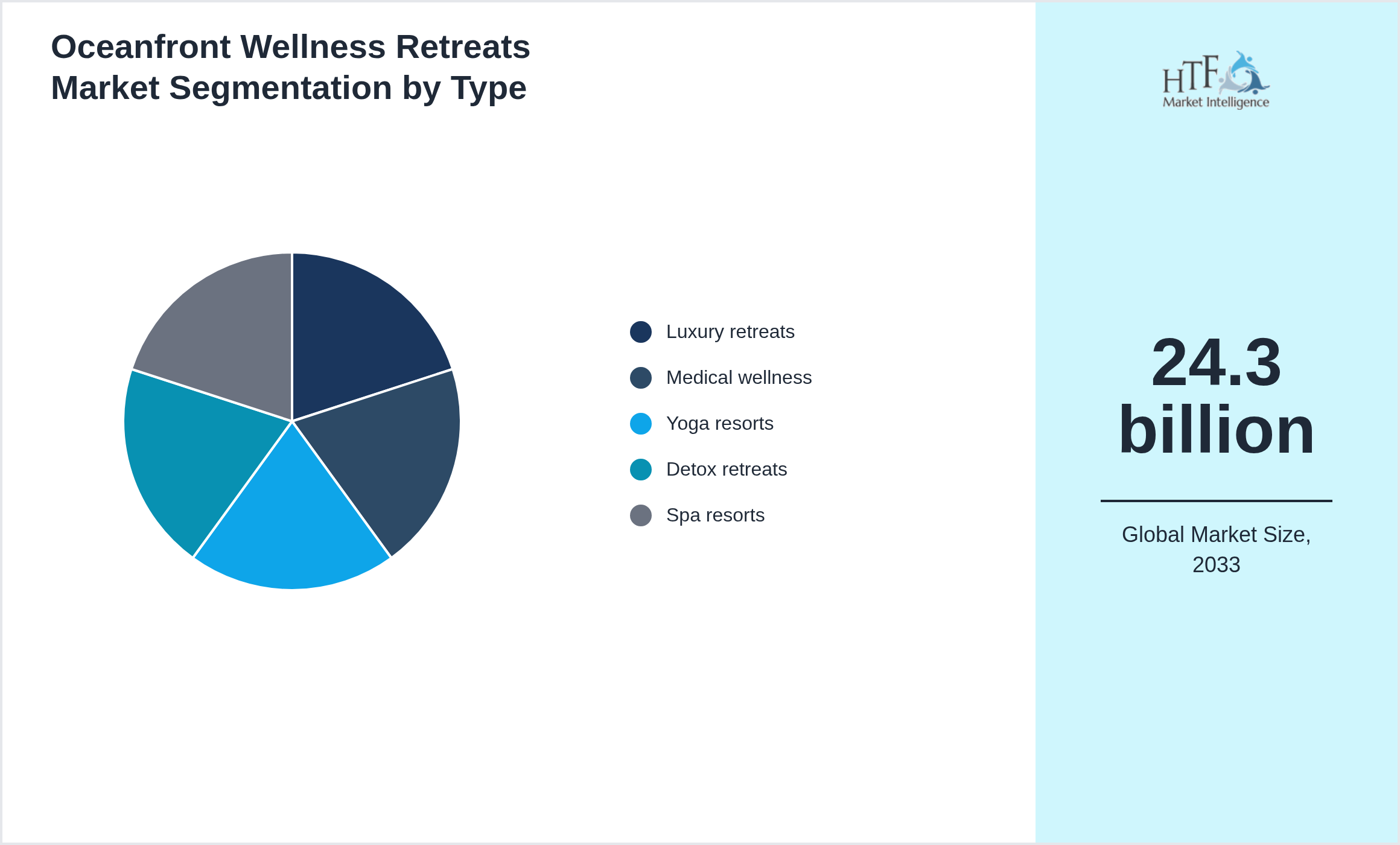
Global Oceanfront Wellness Retreats Market is segmented by Application (Wellness tourism), Type (Luxury retreats, Medical wellness, Yoga resorts, Detox retreats, Spa resorts), and Geography (North America, LATAM, West Europe, Central & Eastern Europe, Northern Europe, Southern Europe, East Asia, Southeast Asia, South Asia, Central Asia, Oceania, MEA)
Pricing
Report Overview
Industry Overview
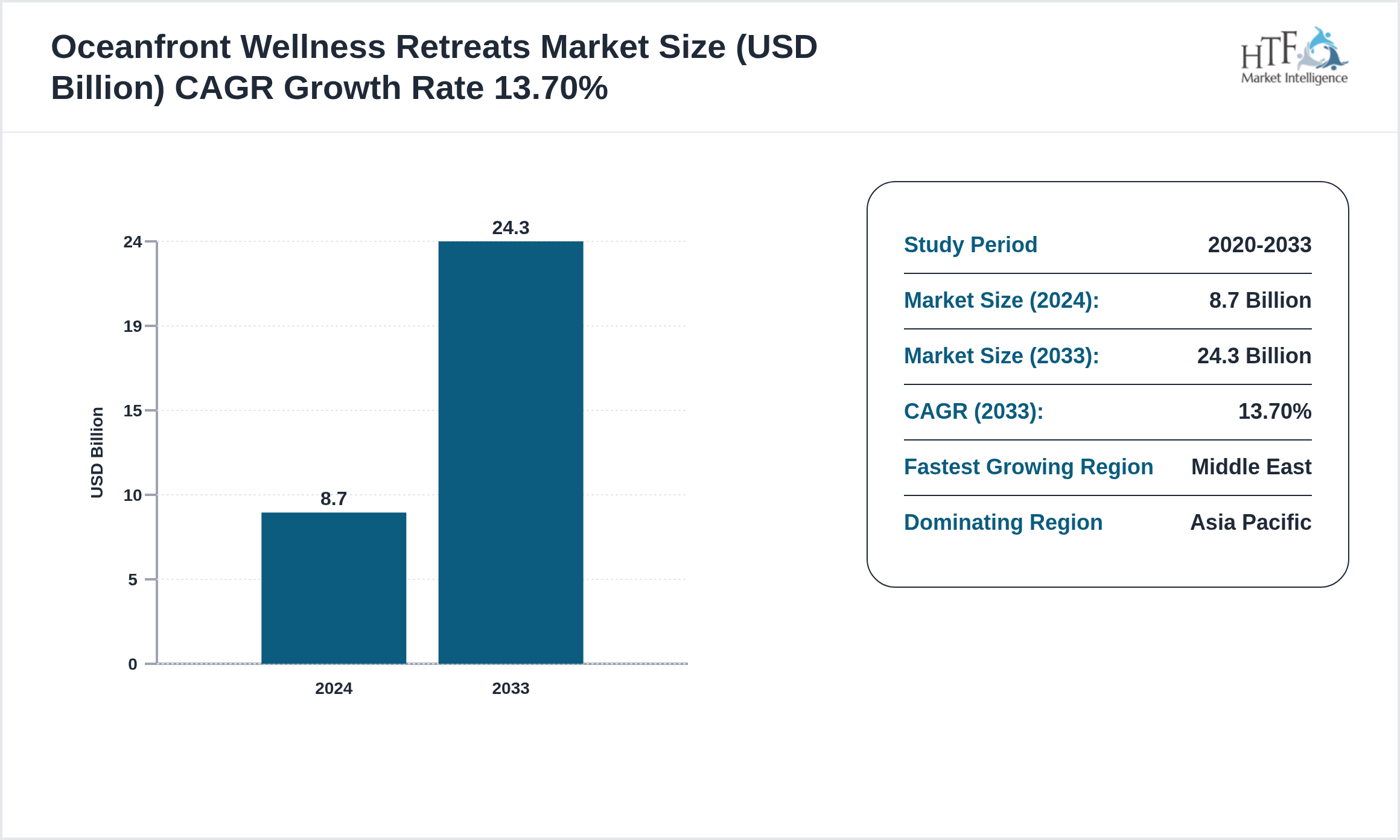
The Oceanfront Wellness Retreats market is expected to reach 24.3 billion by 2033 and is growing at a CAGR of13.70% between 2024 and 2033.
Oceanfront Wellness Retreats refer to premium hospitality destinations located near coastal environments that combine luxury accommodation with holistic wellness services such as spa therapies, meditation programs, yoga retreats, detox treatments, nutrition planning, and mental wellness experiences. The market includes eco-resorts, therapeutic resorts, wellness tourism infrastructure, beachfront rehabilitation centers, and luxury healing destinations designed to provide physical relaxation and emotional rejuvenation. Growth is driven by rising wellness tourism, increasing consumer focus on preventive healthcare, demand for personalized travel experiences, and expansion of luxury sustainable hospitality concepts
Source: HTF Market Intelligence (HTF MI)
Market Size & Forecast
Market Segmentation
Selecting segmentation criteria in Six Senses (Thailand), Banyan Tree (Singapore), Anantara (Thailand), Taj (India), Oberoi (India), Four Seasons (Canada), Aman (Singapore), Marriott (US), Hyatt (US), Accor (France), Rosewood (US), COMO (Singapore), Belmond (UK), ITC (India), Kempinski (Germany) involves several key steps. Researchers begin by defining their objectives, such as understanding consumer behavior or identifying market opportunities. They then gather relevant data on demographics, psychographics, and buying behavior. Next, they identify segmentation variables like age, location, lifestyle, and purchase patterns. Using analytical tools, they analyze the data to find distinct market segments and evaluate their attractiveness based on size, growth potential, and alignment with business goals. Detailed profiles are created for each segment, and the most promising ones are selected for targeting. Finally, tailored marketing strategies are developed, and the performance of these strategies is monitored and adjusted as needed. This process ensures that segmentation effectively identifies valuable market opportunities and aligns with strategic goals.
Segmentation by Type
- • Luxury retreats
- • Medical wellness
- • Yoga resorts
- • Detox retreats
- • Spa resorts
Segmentation by Application
- • Wellness tourism
Oceanfront Wellness Retreats Market Dynamics
TheOceanfront Wellness Retreats is driven by factors such as increasing demand in end-use industries, technological advancements, research and development (R&D), economic growth, and increasing global trade.
Influencing Trend:
- • Integrated wellness ecosystems personalized therapy programs and sustainable luxury hospitality are major trends shaping oceanfront wellness retreats. Retreat operators increasingly incorporate AI-enabled wellness tracking wearable health monitoring and customized nutrition planning into guest experiences. Eco-conscious resort design organic cuisine and nature-based healing concepts are gaining strong traction among affluent travelers. Sleep optimization therapies biohacking retreats and mental wellness programs continue emerging as premium service categories. Partnerships with healthcare professionals wellness influencers and luxury lifestyle brands further strengthen customer engagement and market positioning
- • Growing awareness regarding mental health preventive wellness and holistic lifestyle improvement is significantly driving the oceanfront wellness retreats market. Consumers increasingly seek relaxation-focused travel experiences combining coastal environments wellness therapies and luxury hospitality services. Rising stress levels burnout concerns and increasing interest in mindfulness tourism further strengthen demand globally. Wellness retreat operators continue expanding offerings such as yoga programs meditation therapies nutritional counseling and spa treatments within premium beachfront destinations. Increasing popularity of digital detox vacations and healthy aging tourism also supports long-term market growth
- • High development costs seasonal tourism dependency and increasing operational complexity create major challenges for oceanfront wellness retreats. Coastal construction regulations environmental sustainability compliance and climate-related risks increase infrastructure investment requirements significantly. Delivering personalized wellness services requires skilled professionals advanced facilities and continuous service innovation. Economic downturns and reduced discretionary travel spending can negatively impact premium wellness tourism demand. Additionally competition from luxury resorts medical tourism centers and wellness-focused cruise operators intensifies pressure on pricing strategies and service differentiation
- • Expanding wellness tourism demand and rising consumer willingness to invest in preventive healthcare travel create strong opportunities for oceanfront wellness retreat operators. Premium coastal destinations in emerging tourism markets provide significant investment potential for luxury wellness developments. Integration of medical wellness services corporate wellness retreats and long-stay therapeutic programs can diversify revenue streams and improve occupancy stability. Growth in digital wellness ecosystems and remote work tourism also supports opportunities for wellness-oriented long-duration stays. Collaborations with fitness brands healthcare providers and sustainable tourism organizations further enhance premium positioning and customer loyalty
Regional Insight
The Asia Pacificregion holds a dominant market share, primarily driven by growing consumption patterns, a rising population, and robust economic activity that fuels market demand. Meanwhile, the Middle East Region is experiencing the fastest growth, propelled by increasing infrastructure developments, expanding industrial activities, and a surge in consumer demand, positioning it as a key driver for future market expansion.
- North America
- LATAM
- West Europe
- Central & Eastern Europe
- Northern Europe
- Southern Europe
- East Asia
- Southeast Asia
- South Asia
- Central Asia
- Oceania
- MEA
- • North America maintains strong market maturity in Oceanfront Wellness Retreats through luxury coastal resorts integrated wellness tourism programs and growing consumer interest in preventive healthcare travel. California Florida and Mexico continue attracting high-income travelers seeking spa therapies meditation programs and holistic wellness experiences combined with beachfront hospitality. Europe benefits from premium wellness tourism destinations in Greece Spain Italy and Portugal where coastal retreats integrate medical wellness luxury spa services and sustainable hospitality concepts. Increasing health consciousness and aging populations continue supporting high-value wellness tourism demand. Asia Pacific records the fastest growth through tropical wellness destinations in Bali Thailand Maldives and Sri Lanka supported by affordable luxury offerings spiritual tourism and rising international traveler inflows. Hospitality providers increasingly combine wellness treatments yoga programs and eco-resort experiences to strengthen global competitiveness. Middle East markets are expanding steadily through luxury wellness developments along the Red Sea and Gulf coastlines where premium tourism investments target affluent international travelers seeking exclusive health and relaxation experiences
Key Players
The companies highlighted in this profile were selected based on insights from primary experts and an evaluation of their market penetration, product offerings, and geographical reach:
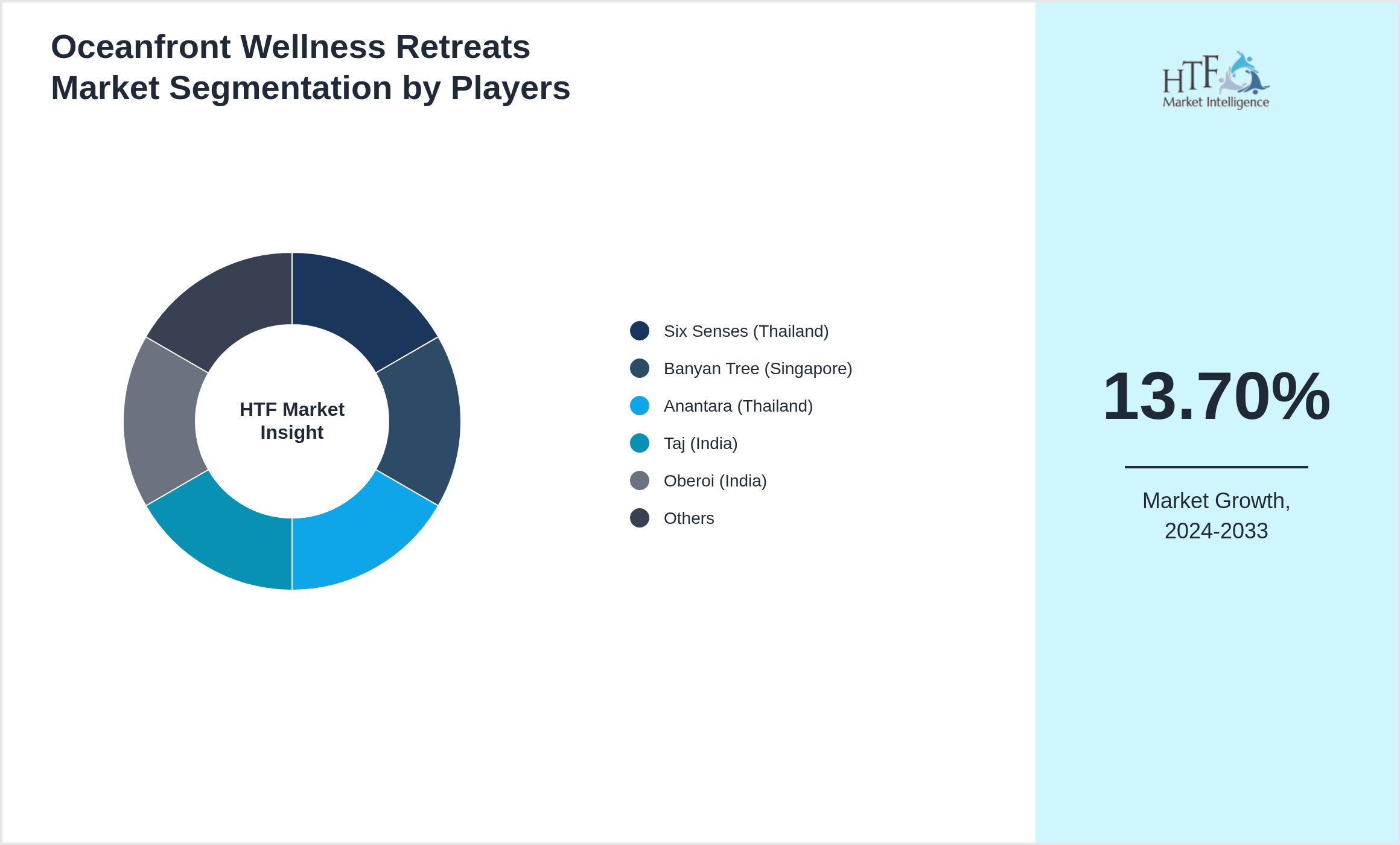
- • Six Senses (Thailand)
- • Banyan Tree (Singapore)
- • Anantara (Thailand)
- • Taj (India)
- • Oberoi (India)
- • Four Seasons (Canada)
- • Aman (Singapore)
- • Marriott (US)
- • Hyatt (US)
- • Accor (France)
- • Rosewood (US)
- • COMO (Singapore)
- • Belmond (UK)
- • ITC (India)
- • Kempinski (Germany)
Regulatory Framework
The regulatory framework for the Oceanfront Wellness Retreats ensures product safety, fair competition, and consumer protection. It encompasses setting standards for product quality and safety, enforcing truthful advertising and labeling, and implementing environmental sustainability practices. Regulations include robust procedures for product recalls, data protection, and anti-competitive practices, while also overseeing import/export controls and intellectual property rights. Regulatory bodies enforce these rules through inspections and penalties, and consumer education programs help individuals make informed decisions. This framework aims to protect consumers, promote fair market conditions, and encourage ethical business practices.
- • The Oceanfront Wellness Retreats market is heavily regulated through coastal development laws environmental conservation policies water resource management standards and hospitality licensing frameworks designed to protect fragile marine ecosystems. Governments and environmental agencies increasingly require sustainability compliance involving wastewater treatment renewable energy integration coastal erosion mitigation and restrictions on beachfront construction density. Wellness-focused operators must also comply with health and safety regulations covering spa treatments therapeutic services food quality standards and medical wellness offerings. Rising insurance costs linked to climate-related risks such as hurricanes flooding and coastal erosion are increasing operational expenditures and limiting development scalability in high-risk coastal regions. Resource dependency on clean water access sustainable seafood sourcing and energy-intensive climate control systems further impacts profitability. Consumers are increasingly shifting toward eco-certified luxury wellness destinations creating substitution pressure on conventional beachfront resorts lacking sustainability credentials. Despite higher compliance costs and climate-related operational risks premium pricing opportunities strong international wellness tourism demand and growing institutional investment in sustainable luxury hospitality continue to support long-term market expansion without full stop
Competitive Insights
The key players in the Oceanfront Wellness Retreats are intensifying their focus on research and development (R&D) activities to innovate and stay competitive. Major companies, such as Six Senses (Thailand), Banyan Tree (Singapore), Anantara (Thailand), Taj (India), Oberoi (India), Four Seasons (Canada), Aman (Singapore), Marriott (US), Hyatt (US), Accor (France), Rosewood (US), COMO (Singapore), Belmond (UK), ITC (India), Kempinski (Germany), are heavily investing in R&D to develop new products and improve existing ones. This strategic emphasis on innovation is driving significant advancements in product formulation and the introduction of sustainable and eco-friendly products.
In addition to R&D and acquisitions, there is a notable shift towards green investments among key players in the consumer goods industry. Companies are increasingly committing resources to sustainable practices and the development of environmentally friendly products. This green investment is in response to growing consumer demand for sustainable solutions and stringent environmental regulations. By prioritizing sustainability, these companies are not only contributing to environmental protection but also positioning themselves as leaders in the green movement, thereby fueling market growth.
Merger Acquisition
- • Mar 2026 – A luxury resort operator acquired a coastal wellness retreat brand specializing in holistic therapy programs oceanfront rehabilitation facilities and integrated medical wellness tourism services. The acquisition enabled the buyer to expand its premium wellness hospitality business across tropical tourism markets and improve access to high-income wellness travelers. The company announced integration of AI-based health monitoring systems personalized nutrition services and immersive mental wellness experiences into its resort operations. In Jun 2026 a healthcare hospitality provider partnered with a luxury travel management company to develop wellness retreat packages combining preventive healthcare mindfulness therapy and luxury accommodation services. Several regional spa and resort operators also pursued acquisitions of beachfront wellness facilities to strengthen international tourism partnerships and diversify premium service portfolios. The transaction activity reflected rising demand for wellness-focused travel experiences and long-stay therapeutic tourism. Analysts indicated that continued consolidation would improve operational scalability digital health integration and luxury wellness service differentiation across global resort destinations
Patent Analysis
- • Oceanfront Wellness Retreat operators increasingly expand trademark portfolios covering luxury wellness brands holistic therapy programs spa hospitality services mindfulness tourism experiences and premium coastal wellness destination concepts designed for affluent health-conscious travelers. Patent filings are growing around smart wellness monitoring devices AI-based health optimization systems personalized therapy technologies advanced air and water purification systems wearable health integration tools and environmentally sustainable resort infrastructure supporting wellness-focused hospitality ecosystems. Copyright activity protects branded wellness content meditation programs digital therapy platforms virtual fitness sessions health-oriented multimedia materials and online guest engagement applications integrated into wellness travel packages. Industry players also safeguard proprietary wellness assessment methodologies AI-powered nutritional recommendation systems digital sleep optimization programs and customized retreat management platforms that improve guest personalization and operational differentiation. Sustainability-focused architectural concepts and eco-friendly wellness facility technologies increasingly generate intellectual property activity as luxury wellness tourism expands globally
Investment and Funding Scenario
- • The Oceanfront Wellness Retreats market has experienced strong investment growth driven by increasing global demand for preventive healthcare tourism
Market Entropy
- • Q7 2025: AI-assisted wellness scheduling and personalized program platforms improved guest adherence to wellness routines by 30% and increased average revenue per guest
- • Q6 2025: Investment in eco-friendly building materials and sustainable energy systems expanded commercial scalability and reduced operational carbon footprint
- • Q5 2025: Operational modernization included automated spa booking smart environmental controls and resource optimization reducing energy costs by 20%
- • Q4 2025: Regulatory compliance with local coastal environmental and health regulations accelerated market adoption
- • Q3 2025: Sustainability milestones included integration of desalination plants solar energy and organic landscaping enhancing brand ESG scores
- • Q2 2025: Industry-wide operational shifts toward wellness-integrated hospitality and AI-based nutrition and fitness programs improved guest satisfaction and loyalty
- • Q1 2025: Digital transformation initiatives including mobile wellness tracking IoT-enabled room control and AI-driven experience customization improved operational efficiency and commercial scalability
Report Infographics:
| Report Features | Details |
| Base Year | 2024 |
| Based Year Market Size 2024 | 8.7 billion |
| Historical Period Market Size 2020 | USD Million ZZ |
| CAGR (2024 to 2033) | 13.70% |
| Forecast Period | 2024 to2033 |
| Forecasted Period Market Size 2033 | 24.3 billion |
| Scope of the Report | Luxury retreats, Medical wellness, Yoga resorts, Detox retreats, Spa resorts, Wellness tourism |
| Regions Covered | North America, LATAM, West Europe, Central & Eastern Europe, Northern Europe, Southern Europe, East Asia, Southeast Asia, South Asia, Central Asia, Oceania, MEA |
| Year-on-Year Growth | 14.50% |
| Companies Covered | Six Senses (Thailand), Banyan Tree (Singapore), Anantara (Thailand), Taj (India), Oberoi (India), Four Seasons (Canada), Aman (Singapore), Marriott (US), Hyatt (US), Accor (France), Rosewood (US), COMO (Singapore), Belmond (UK), ITC (India), Kempinski (Germany) |
| Customization Scope | 15% Free Customization (For EG) |
| Delivery Format | PDF and Excel through Email
Want to Buy Specific Sections of This Report?
|
Research Methodology
The research methodology for the consumer goods industry involves several key steps to ensure comprehensive and actionable insights. First, the research objectives are clearly defined, focusing on aspects like consumer behavior, market opportunities, competitive dynamics, or regulatory impacts. A thorough literature review follows, drawing from academic journals, industry reports, government publications, and market analyses to establish a knowledge base and identify research gaps. Data collection encompasses both primary methods, such as surveys, interviews, and focus groups with consumers and industry experts, and secondary methods, including analysis of market reports, government data, and industry publications. Quantitative data is analyzed using statistical tools to identify patterns and market segments, while qualitative data from interviews and focus groups is examined to extract key themes and insights.
The market is then segmented based on demographics, psychographics, geography, and purchasing behavior, and competitive analysis is conducted to evaluate key players' strategies and strengths. Trend analysis identifies current and emerging industry trends. Findings are compiled into a detailed report with data visualizations and strategic recommendations. The research is validated and refined through cross-checking and expert feedback, and a framework for continuous monitoring is established to keep the research current and relevant.
Research enthusiast focused on transforming data uncovering into actionable insights through data-driven decision-making.