
Published: Jan 07, 2026
•ID: 4401927
•134 PagesWeed Control
Solutions
Weed Control Solutions Market - Global Industry Size & Growth Analysis 2020-2033
Global Weed Control Solutions Market is segmented by Application (Cereals, Oilseeds, Plantation crops, Turf, Non-crop areas), Type (Selective herbicides, Non-selective, Bio-herbicides, Pre-emergent, Post-emergent), and Geography (North America, LATAM, West Europe, Central & Eastern Europe, Northern Europe, Southern Europe, East Asia, Southeast Asia, South Asia, Central Asia, Oceania, MEA)
Report ID:
HTF4401927
Published:
CAGR:
5.40%
Market Size (2024):
$40.9 billion
Forecast (2033):
$62.3 billion
Pricing
Report Overview
Overview
The global Weed Control Solutions market was valued at 40.9 billion in 2024 and is expected to grow at a 5.40% from 2024 to 2033. The Weed Control Solutions, which includes goods that people buy for their own use, is essential to the world economy. These products are typically separated into two primary categories: non-durable goods (such as food, drinks, and personal care items) and durable goods (such as furniture and appliances). Due to ongoing innovation and changing consumer preferences, the industry is fiercely competitive.
Weed control solutions include chemicalbiologicaland mechanical methods used to manage unwanted plant growth that competes with crops for nutrientswaterand lightsupporting higher productivity and sustainable land use.
Source: HTF Market Intelligence (HTF MI)
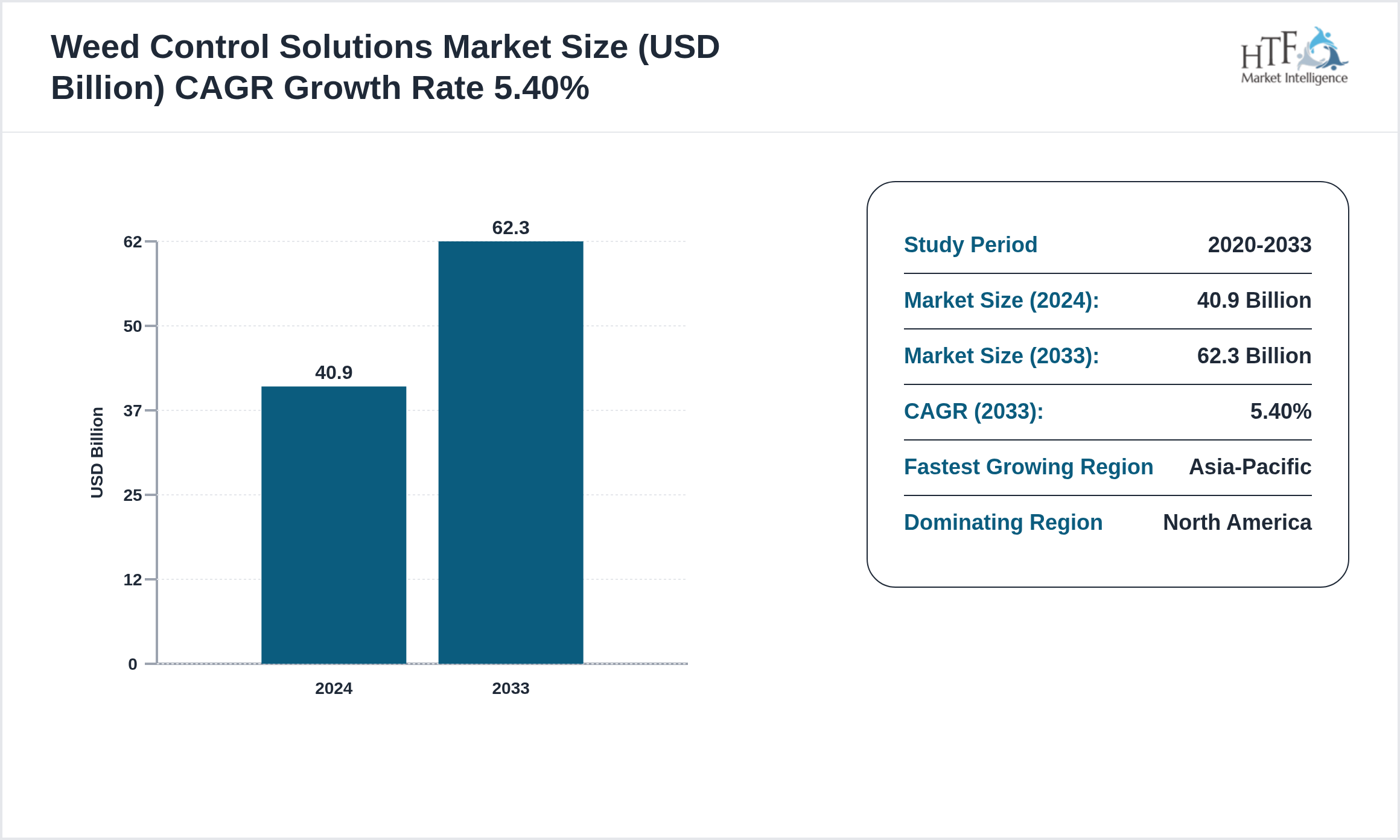
The research report shows the growth potential of the global Weed Control Solutions market. The market for Weed Control Solutions is anticipated to increase steadily. For Weed Control Solutions to be widely used, supply chain optimization, cost reduction, and product differentiation are still essential. For market participants to take advantage of the enormous prospects offered by the Weed Control Solutions market, they must make R&D investments, establish strategic alliances, and match their products with changing customer tastes.
Key highlights of the Study:
• CAGR of the market during the forecast period 2024-2033
• In-depth information on growth factors that will accelerate the Weed Control Solutions market in the next few years.
• Detailed Insights on futuristic trends and changing consumer behavior in Weed Control Solutions.
• Forecast of the Weed Control Solutions market size and its contribution to the parent market by type, application, and region and country.
• A broad view of customer demand in the Weed Control Solutions industry
• Uncover the market’s competitive landscape and in-depth information on various players
• Comprehensive information about factors that will challenge the growth of Weed Control Solutions players.
Regional Analysis
- • North America and Latin America dominate due to large-scale row cropping. Europe adopts integrated weed management. APAC growth is driven by rice and horticulturewhile Africa seeks affordable post-emergent solutions.
Market Entropy
- • Aug 2024 – Weed control innovation addressed herbicide resistance challenges.
Merger & Acquisition
- • In January 2024
Regulatory Landscape
- • Herbicides face strong regulatory pressure over resistance and environmental impact. Many regions mandate resistance management plans and restrict certain active ingredientsaccelerating demand for alternatives.
Patent Analysis
- • Patent activity focuses on resistance-breaking formulationsapplication timing systemsand synergistic mixtures. Process and formulation patents dominate as new modes of action are rare.
Investment and Funding Scenario
- • Investors fund precision weed controlroboticsand alternative chemistries. Capital shifts toward non-chemical solutions and digital integration to offset regulatory and resistance risks.
Weed Control Solutions Market Dynamics
Numerous elements impact market dynamics in this industry, including evolving consumer preferences, legal requirements, and technological advancements.
Market Driver:
The report can identify and analyze the factors driving the growth of the Weed Control Solutions market. Including
- • Labor shortagesyield losses from weed competitionand need for efficient land management sustain demand for advanced weed control products.
The increasing demand for Weed Control Solutions is one of the factors driving the market’s growth.
- • Shift toward integrated weed managementherbicide rotationmechanical-chemical hybridsand digital weed mapping.
Server factors driving the Weed Control Solutions market’s opportunity.
- • Growth in non-chemical weed control tools and selective herbicides offers long-term expansion potential.
What challenges are facing the Weed Control Solutions market?
- • Herbicide resistanceregulatory bansand environmental concerns challenge conventional weed control approaches.
Regional Outlook
The Asia-Pacific is experiencing the fastest growth, driven by its rapidly increasing population and expanding economic activity across key sectors. This acceleration is supported by growing urbanization, infrastructure development, and favorable government policies promoting industrial growth. Additionally, the region benefits from a youthful, expanding workforce and rising consumer demand. In contrast, North America remains the market leader, maintaining its dominance through well-established industries, technological innovations, and a strong global presence.
- North America
- LATAM
- West Europe
- Central & Eastern Europe
- Northern Europe
- Southern Europe
- East Asia
- Southeast Asia
- South Asia
- Central Asia
- Oceania
- MEA
Loading map...
Weed Control Solutions Key Players Covered
The companies profiled were selected based on insights from industry experts and a thorough evaluation of their market influence, product range, and geographical presence.
- • Bayer (EU)
- • BASF (EU)
- • Syngenta (EU)
- • Corteva (US)
- • FMC (US)
- • UPL (IN)
- • ADAMA (IL)
- • Nufarm (AU)
- • PI Industries (IN)
- • Sumitomo (JP)
- • Albaugh (US)
- • Nissan Chemical (JP)
- • Jiangsu Yangnong (CN)
- • Shandong Weifang (CN)
- • Rallis (IN)
- • Arysta (JP)
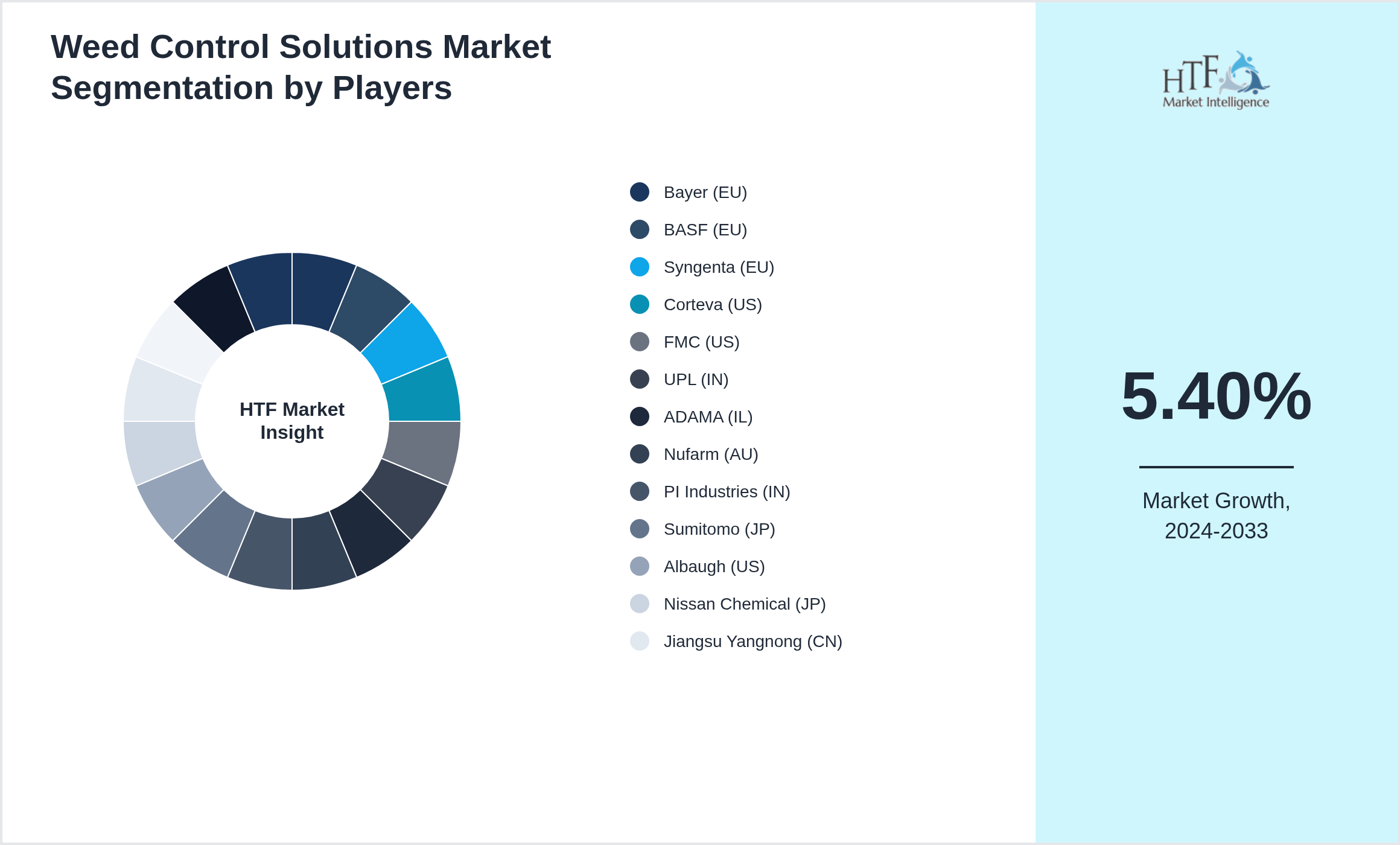
Companies are increasingly focused on expanding their market share through strategic initiatives such as mergers, acquisitions, and green investments, particularly in underserved regions. These strategies are helping companies capture a larger market share while fostering sustainable development. By consolidating resources and widening their geographical reach, these companies not only enhance their competitive position but also align with global trends in sustainability and corporate responsibility.
Weed Control Solutions Market Segment Highlights
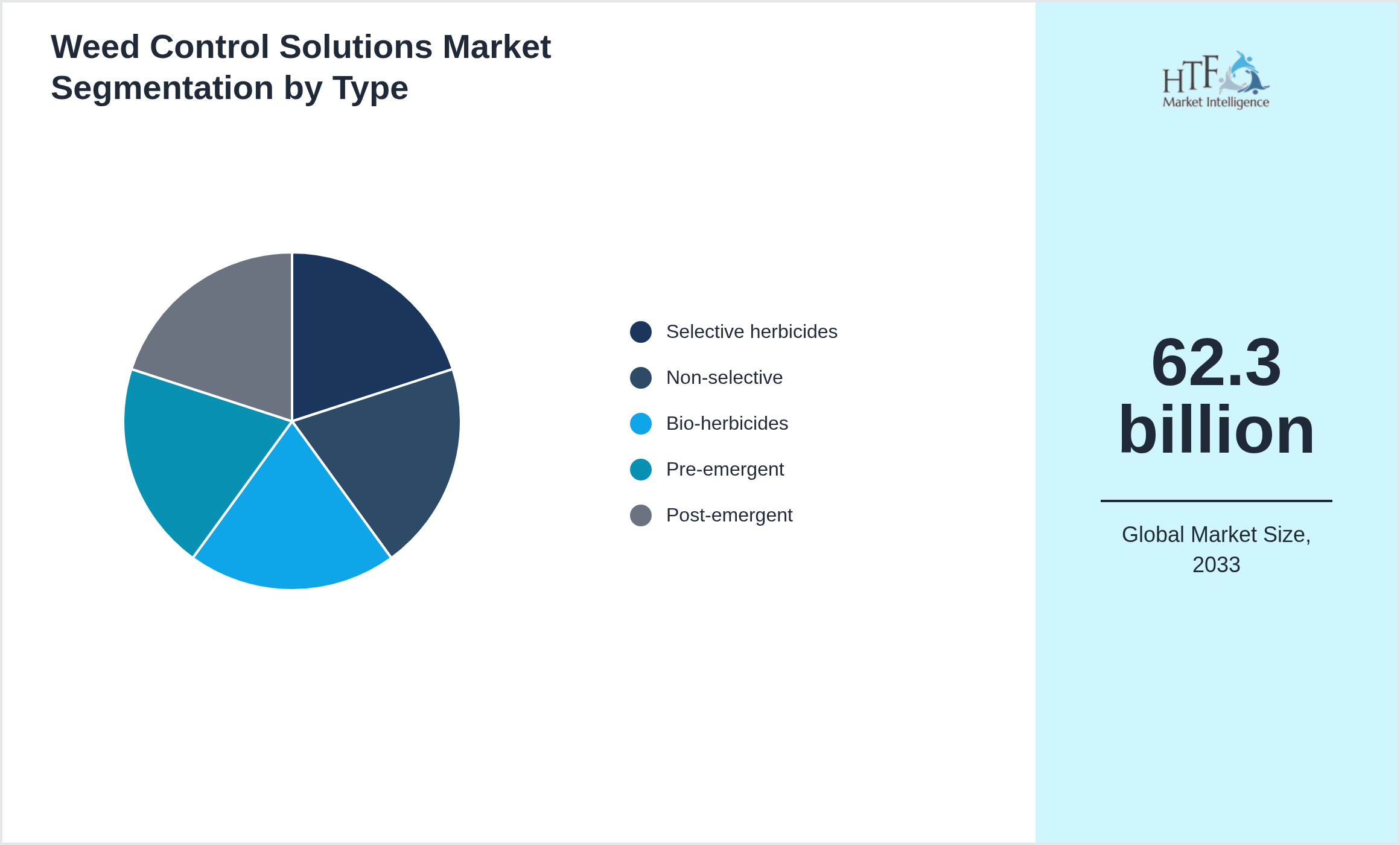
Segmentation by Type
- • Selective herbicides
- • Non-selective
- • Bio-herbicides
- • Pre-emergent
- • Post-emergent
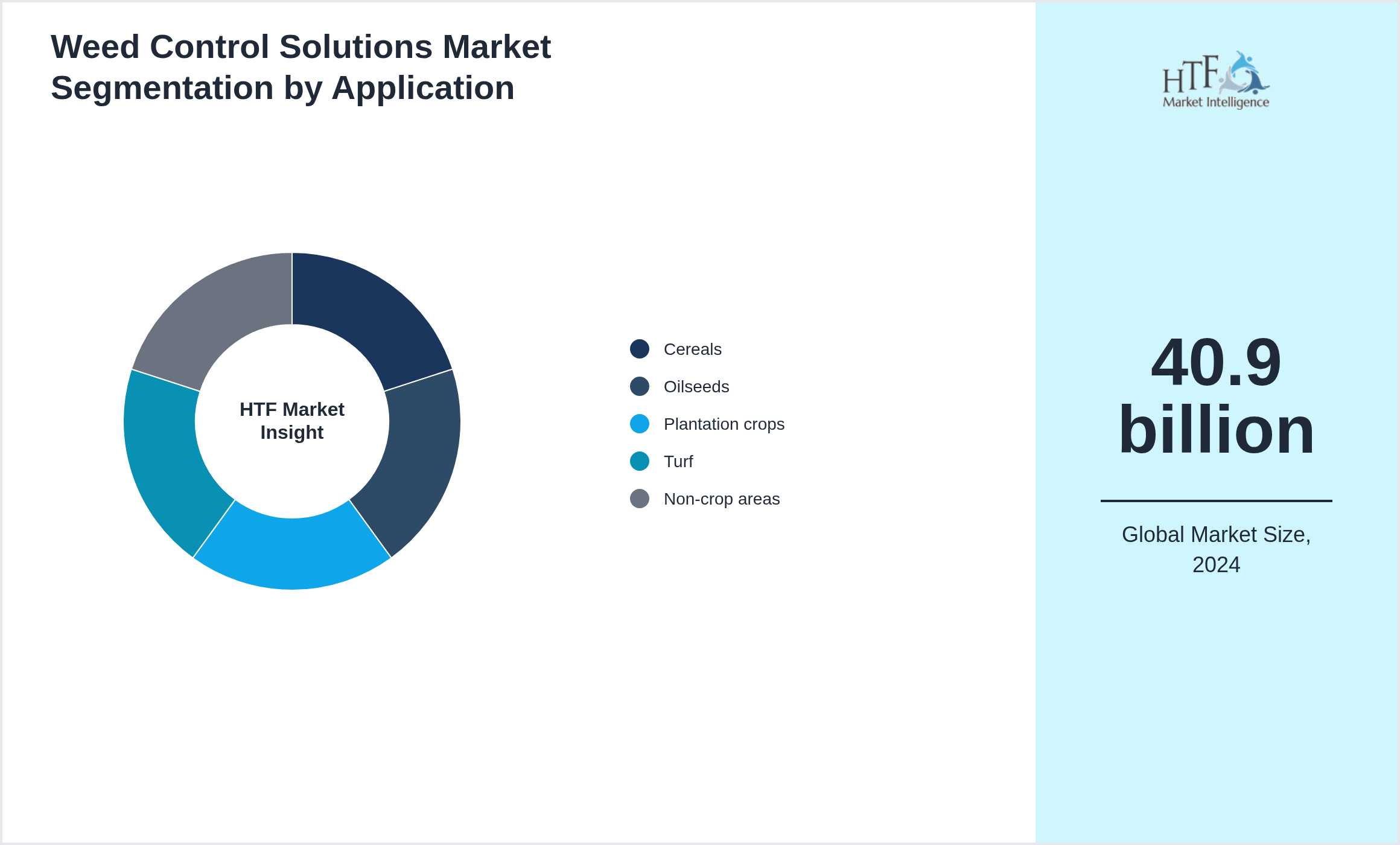
Segmentation by Application
- • Cereals
- • Oilseeds
- • Plantation crops
- • Turf
- • Non-crop areas
This report also analyzes the market by region, providing insights into geographical differences in market performance.
- North America
- LATAM
- West Europe
- Central & Eastern Europe
- Northern Europe
- Southern Europe
- East Asia
- Southeast Asia
- South Asia
- Central Asia
- Oceania
- MEA
Get More Details on the Weed Control Solutions Market Study
.
Need More Details on Market Players and Competitors?
Report Infographics
| Report Features | Details |
| Base Year | 2024 |
| Based Year Market Size 2024 | 40.9 billion |
| Historical Period | 2020 to 2024 |
| CAGR 2024 to 2033 | 5.40% |
| Forecast Period | 2026 to 2033 |
| Forecasted Period Market Size 2033 | 62.3 billion |
| Scope of the Report | Selective herbicides, Non-selective, Bio-herbicides, Pre-emergent, Post-emergent, Cereals, Oilseeds, Plantation crops, Turf, Non-crop areas |
| Companies Covered | Bayer (EU), BASF (EU), Syngenta (EU), Corteva (US), FMC (US), UPL (IN), ADAMA (IL), Nufarm (AU), PI Industries (IN), Sumitomo (JP), Albaugh (US), Nissan Chemical (JP), Jiangsu Yangnong (CN), Shandong Weifang (CN), Rallis (IN), Arysta (JP) |
| Customization Scope | 15% Free Customization |
| Delivery Format | PDF and Excel through Email |