
GCC AI-Powered Circuit Failure Prediction Systems Market Size, Growth & Revenue 2025-2034
GCC AI-Powered Circuit Failure Prediction Systems Market is segmented by Application (Industrial Automation, Consumer Electronics, Automotive Electronics, Aerospace & Defense, Energy Management), Type (Hardware-Based Systems, Software-Based Systems, Cloud-Based Systems, Hybrid Systems, Edge Computing Systems), and Geography (Bahrain, Kuwait, Oman, Qatar, Saudi Arabia, United Arab Emirates)
Pricing
Report Overview
Executive Summary
- •The GCC AI-Powered Circuit Failure Prediction Systems market focuses on the deployment of artificial intelligence technologies to anticipate and mitigate failures in electronic circuits across key sectors such as industrial automation, automotive electronics, aerospace, and energy management. This market integrates a combination of hardware and software solutions, including cloud and edge computing, to monitor real-time circuit performance and predict faults before they occur. The purpose of these systems is to reduce operational downtime, enhance maintenance efficiency, and improve overall system reliability within the growing electronics and automation landscape of the GCC countries. The market scope covers five main product types: hardware-based, software-based, cloud-based, hybrid, and edge computing systems. Rapid technological advancements in AI and increasing investments in smart infrastructure across GCC nations such as Saudi Arabia, UAE, and Qatar contribute to robust market growth. Key applications range from consumer electronics to defense sectors, highlighting the technology’s versatility and critical role in the region’s digital transformation.
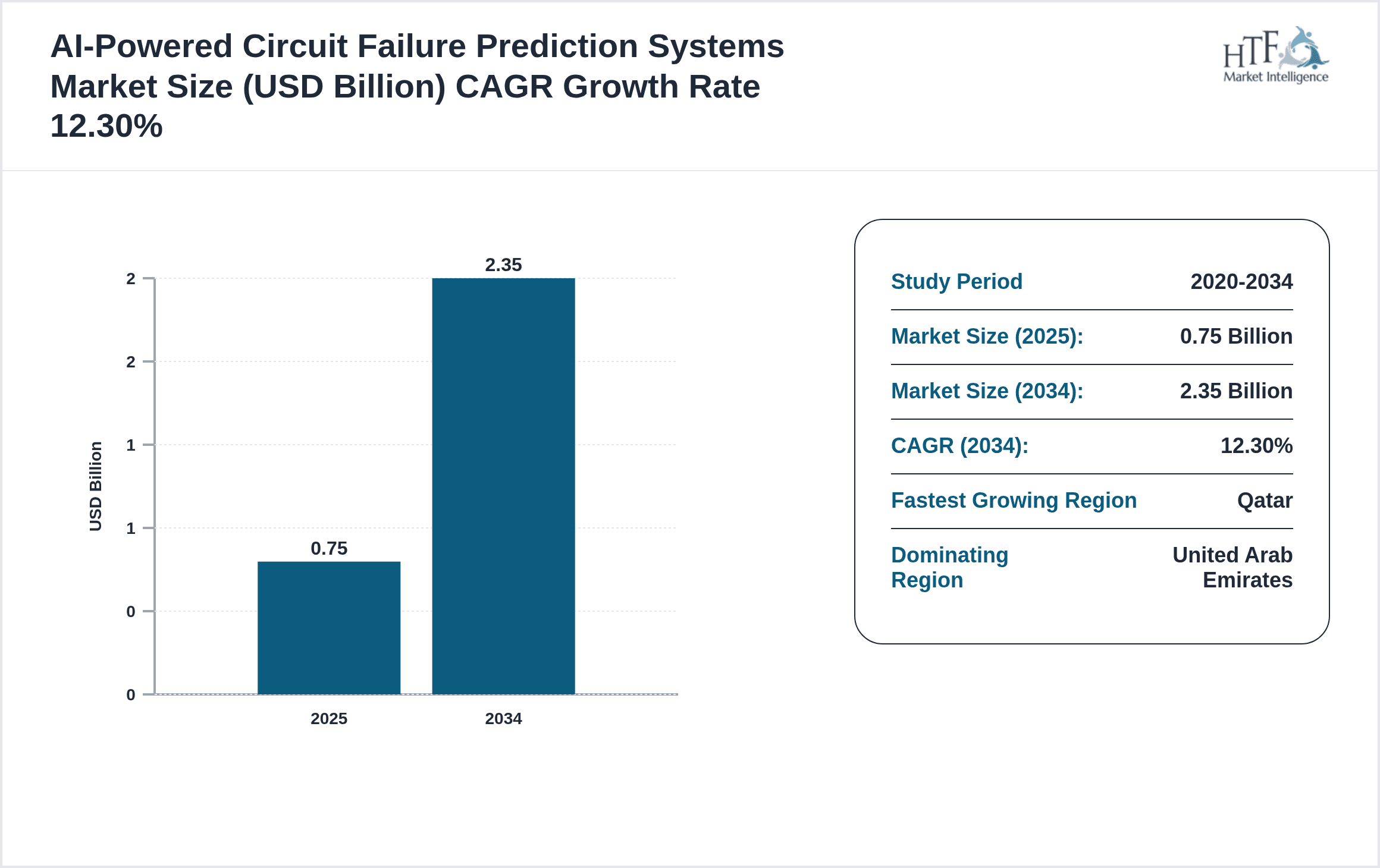
- •The GCC AI-Powered Circuit Failure Prediction Systems market is projected to grow from USD 0.75 billion in 2025 to USD 2.35 billion by 2034, reflecting a CAGR of approximately 12.3%. The United Arab Emirates leads the market with a dominant 38% share, driven by its advanced technological infrastructure and smart city initiatives. Qatar emerges as the fastest growing country with a CAGR of 15.8%, fueled by increased industrial automation and energy sector investments. Software-based systems currently dominate the market due to their scalability and integration capabilities, while edge computing systems are the fastest growing product type, benefiting from enhanced processing speeds and real-time analytics. Industrial automation remains the leading application segment, supported by rapid industrial expansion and government-driven digital transformation programs in the GCC region.
- •This market offers substantial value to electronics manufacturers, industrial operators, energy providers, and government agencies by leveraging AI for predictive maintenance and circuit reliability enhancement. The strategic importance lies in reducing costly unplanned outages, extending equipment lifespans, and optimizing maintenance scheduling. GCC stakeholders are increasingly adopting these AI-powered systems to meet rising demand for operational efficiency and to support the region’s vision for technological innovation and economic diversification. The integration of AI with IoT sensors and cloud infrastructure is accelerating the adoption of predictive circuit failure solutions, fostering a competitive ecosystem among regional and global technology providers.
Competitive Landscape
The competitive environment in the GCC AI-Powered Circuit Failure Prediction Systems market is characterized by a dynamic mix of multinational technology firms and regional specialists focusing on innovation and strategic partnerships. Market players prioritize R&D investments to enhance AI algorithms, improve system accuracy, and expand solution integration across diverse applications. Competition is intense around product differentiation, particularly in software capabilities and edge computing deployment, to meet the increasing demand for real-time predictive analytics. Companies leverage strategic collaborations with local governments and industry stakeholders to strengthen regional presence and tailor solutions to GCC market needs. Pricing strategies vary between premium offerings for large industrial clients and scalable solutions for smaller enterprises, fostering diverse market access. Additionally, mergers and acquisitions have become a strategic approach to consolidate technological expertise and expand product portfolios, further intensifying market rivalry. The competitive landscape is also shaped by regulatory compliance, data security standards, and customer-centric innovation, positioning leading players for sustained growth.
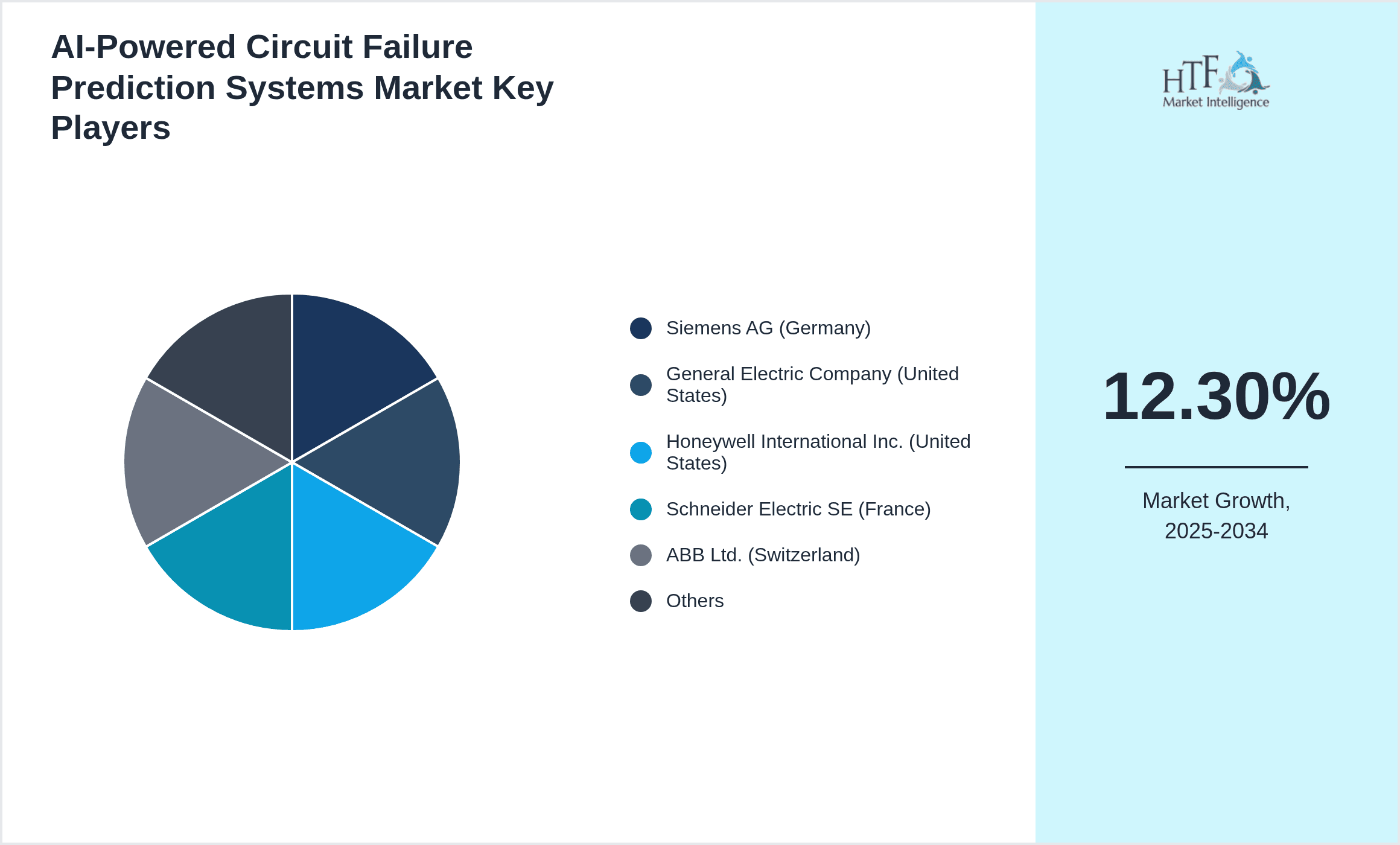
Key Players in AI-Powered Circuit Failure Prediction Systems Market
- •Siemens AG (Germany)
- •General Electric Company (United States)
- •Honeywell International Inc. (United States)
- •Schneider Electric SE (France)
- •ABB Ltd. (Switzerland)
- •IBM Corporation (United States)
- •Rockwell Automation, Inc. (United States)
- •Emerson Electric Co. (United States)
- •Fluke Corporation (United States)
- •Nokia Corporation (Finland)
- •Delta Electronics, Inc. (Taiwan)
- •Hitachi, Ltd. (Japan)
- •Mitsubishi Electric Corporation (Japan)
- •Bosch Rexroth AG (Germany)
- •Continental AG (Germany)
- •Honeywell Middle East (UAE)
- •Siemens Middle East (UAE)
- •ABB Middle East (UAE)
- •Schneider Electric Middle East (UAE)
- •National Electronics Company (Saudi Arabia)
- •Emirates Technology Group (UAE)
- •Qatar Electronics & Automation (Qatar)
- •Kuwait Smart Systems (Kuwait)
- •Bahrain Tech Solutions (Bahrain)
- •Gulf Circuit AI Solutions (Saudi Arabia)
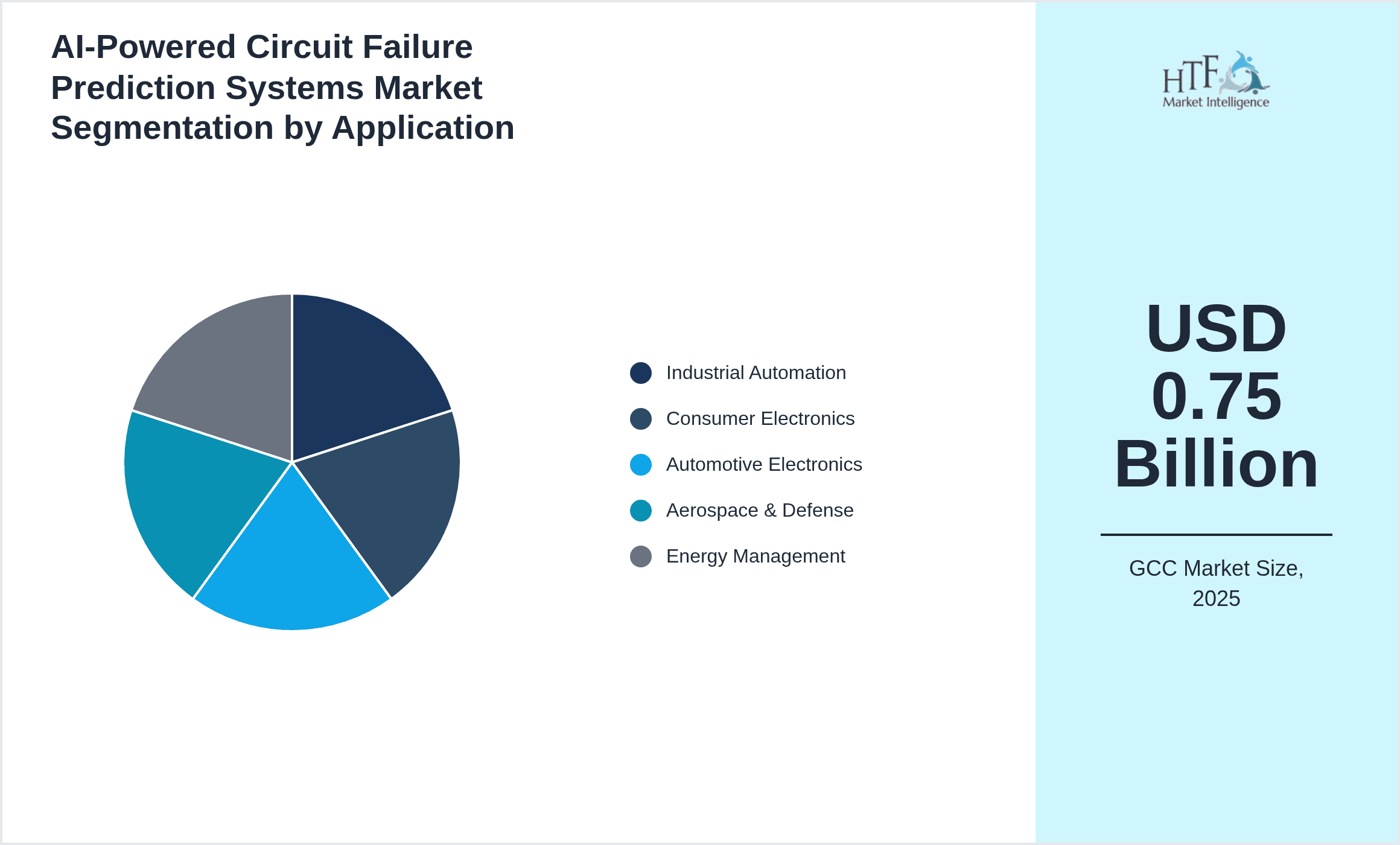
GCC AI-Powered Circuit Failure Prediction Systems Market Breakdown
- •By Type
- ◦Hardware-Based Systems
- ◦Software-Based Systems
- ◦Cloud-Based Systems
- ◦Hybrid Systems
- ◦Edge Computing Systems
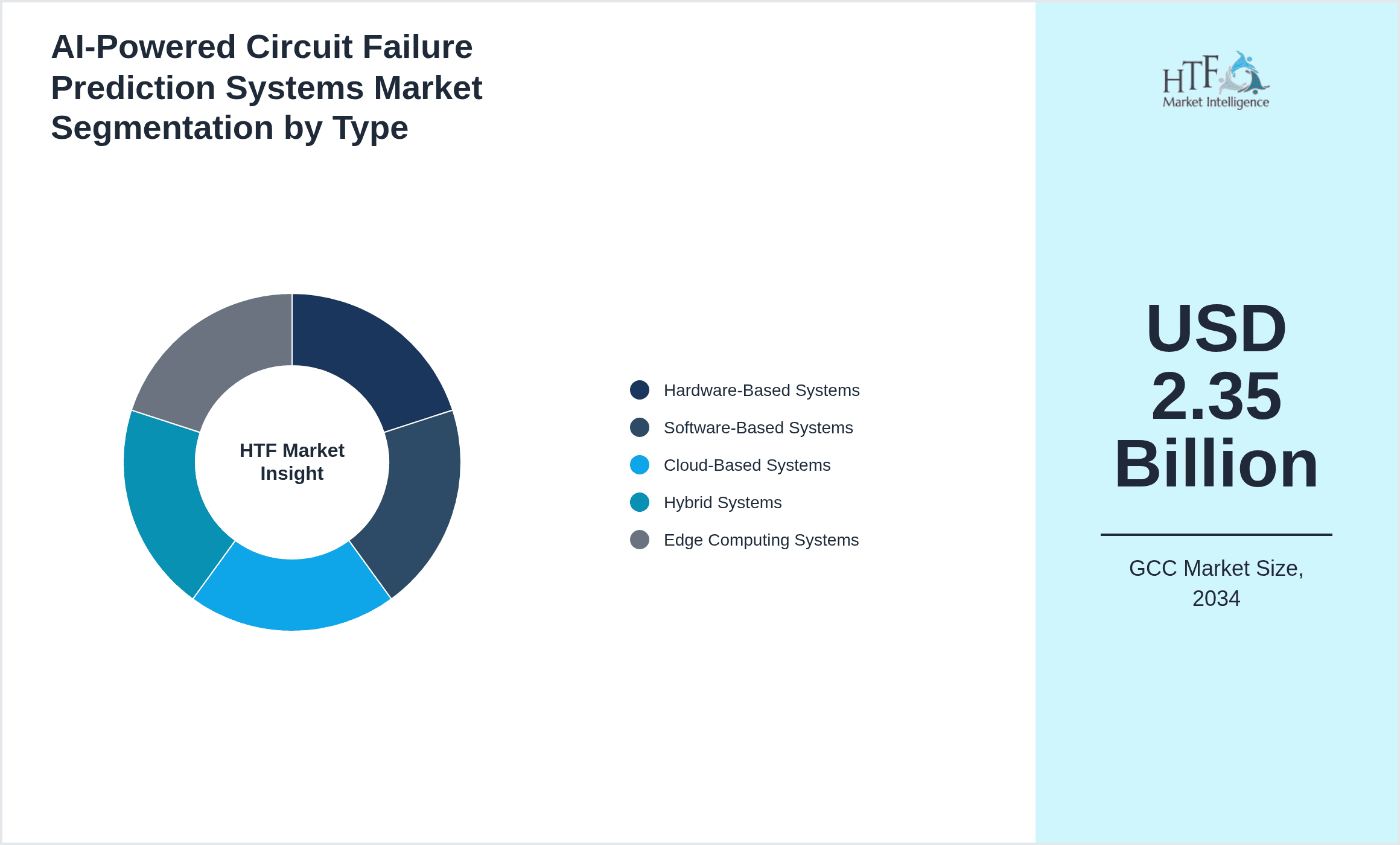
- •By Application
- ◦Industrial Automation
- ◦Consumer Electronics
- ◦Automotive Electronics
- ◦Aerospace & Defense
- ◦Energy Management
- •By Deployment Model
- ◦On-Premise
- ◦Cloud-Based
- ◦Hybrid
- •By End User
- ◦Manufacturing Plants
- ◦Energy Providers
- ◦Automotive Manufacturers
- ◦Aerospace Companies
- ◦Consumer Electronics Firms
Growth Dynamics
- •Rapid industrialization and smart city initiatives across GCC countries, particularly in the UAE and Saudi Arabia, are primary growth drivers fueling demand for AI-powered circuit failure prediction systems to enhance operational efficiency and reduce downtime.
- •The adoption of edge computing technology allows real-time data processing on-site, which is accelerating the deployment of AI-based predictive maintenance solutions, enabling faster fault detection and response in critical infrastructure.
- •Increased investment in renewable energy and energy management systems in the GCC region is driving the integration of AI-powered circuit failure prediction to ensure reliability and reduce maintenance costs of power grid components.
- •Government regulations and initiatives supporting digital transformation and Industry 4.0 frameworks are encouraging enterprises to adopt AI-enabled circuit monitoring systems to improve safety and compliance standards.
- •Growing awareness among automotive and aerospace manufacturers regarding predictive maintenance is fostering adoption of AI systems to minimize unexpected failures and enhance product reliability.
- •Collaborative efforts between technology vendors and local GCC governments for smart infrastructure projects are creating favorable market conditions for innovative AI circuit failure solutions.
- •Rising consumer electronics demand in the GCC with a focus on product longevity is driving the use of software-based predictive tools to preempt circuit faults and optimize warranty management.
Market Trends
- •The integration of AI with IoT sensors is becoming a standard practice in GCC circuit failure prediction systems, enabling continuous monitoring and enhanced data accuracy for predictive analytics in industrial and energy sectors.
- •Cloud-based deployment models are gaining traction due to their scalability and remote accessibility, allowing GCC enterprises to manage circuit health data efficiently across multiple sites.
- •There is a growing trend towards hybrid AI systems that combine hardware robustness with advanced software analytics, offering comprehensive failure prediction capabilities tailored for harsh GCC environmental conditions.
- •GCC market players are increasingly focusing on cybersecurity features within AI-based prediction systems to safeguard sensitive industrial data against rising cyber threats.
- •Strategic partnerships between AI technology providers and regional telecom companies are facilitating the deployment of 5G-enabled circuit monitoring solutions, improving real-time data transmission and analysis.
- •The demand for edge computing continues to surge in the GCC as it reduces latency and reliance on cloud infrastructure, supporting critical applications in aerospace and automotive sectors.
- •Sustainability initiatives in the GCC are influencing market trends, with AI-powered systems helping reduce energy wastage by predicting circuit failures in power management applications.
Market Opportunities
- •Expanding industrial automation projects in Saudi Arabia and UAE present significant growth opportunities for AI-powered circuit failure prediction system providers aiming to enhance plant reliability and efficiency.
- •Emerging demand for smart grid and renewable energy integration in the GCC offers new avenues for AI circuit failure prediction technologies to support energy management and fault diagnostics.
- •The increasing adoption of electric vehicles in the GCC automotive market opens opportunities for advanced predictive maintenance solutions tailored to automotive electronics circuits.
- •Government-led smart city initiatives across the GCC are creating demand for integrated AI systems capable of predictive monitoring in urban infrastructure and consumer electronics sectors.
- •Collaborations between regional technology startups and global AI firms can accelerate innovation and localization of circuit failure prediction systems for GCC-specific operational environments.
- •Growing emphasis on cybersecurity in AI applications allows providers to offer differentiated solutions combining failure prediction with protective measures, addressing a critical market need.
- •Cloud and hybrid deployment adoption in small and medium enterprises across the GCC provides scalable market opportunities for flexible AI-powered predictive maintenance solutions.
Market Challenges
- •High initial investment costs for AI-powered circuit failure prediction systems can deter small and medium enterprises in the GCC from adopting advanced predictive maintenance technologies.
- •Limited availability of skilled AI and data analytics professionals in the GCC region poses a significant challenge to effective implementation and operation of these systems.
- •Interoperability issues between legacy electronic systems and new AI-powered prediction tools require complex integration efforts, increasing deployment time and costs for GCC industries.
- •Data privacy and security concerns related to cloud-based AI solutions may slow down adoption rates, especially in sensitive sectors like aerospace and defense within the GCC.
- •Regulatory uncertainties and evolving compliance requirements across different GCC countries can create barriers for introducing standardized AI circuit failure prediction technologies.
- •Environmental factors such as extreme temperatures and dust in GCC countries necessitate robust hardware designs, which can increase system complexity and costs.
- •Market fragmentation due to varying levels of digital maturity among GCC countries challenges uniform market strategies and solution scalability.
Regulatory Framework
- •Between 2020 and 2025, GCC countries have progressively introduced data protection regulations addressing AI and IoT applications, requiring compliance with stringent cybersecurity measures to ensure safe deployment of circuit failure prediction systems.
- •The UAE's Federal Law No. 2 of 2019 on combating cybercrimes mandates robust security protocols for AI technologies, influencing market players to enhance data privacy and system resilience for predictive maintenance solutions.
- •Saudi Arabia's National Cybersecurity Authority has implemented guidelines for AI system certifications focused on operational safety and reliability, directly impacting the design and deployment of AI-powered circuit failure prediction products.
- •Qatar's regulatory framework includes mandates for smart infrastructure projects to incorporate AI technologies that adhere to safety and environmental standards, promoting adoption of AI predictive systems in energy and industrial sectors.
- •Bahrain and Kuwait have introduced incentives and grants to encourage AI innovation, coupled with standards for interoperability and data governance, facilitating market growth while ensuring compliance with regional policies.
Market Intelligence
- •15th January 2025, Siemens AG launched an advanced AI-powered circuit failure prediction platform tailored for the GCC's industrial sector, featuring enhanced edge computing capabilities and integration with existing automation infrastructure. This product aims to reduce downtime and maintenance costs by providing predictive analytics with higher accuracy and faster fault detection across manufacturing plants in the UAE and Saudi Arabia. The launch reflects Siemens' commitment to supporting the region's digital transformation initiatives and Industry 4.0 adoption. Source: Siemens Official Press Release
- •3rd March 2025, Honeywell International Inc. introduced a new cloud-based AI predictive maintenance solution designed specifically for energy management systems in the GCC market. The platform offers scalable deployment options and real-time monitoring for power grids and renewable energy plants in Qatar and Bahrain, enhancing system reliability and operational efficiency. Honeywell's innovation addresses regional demands for smart energy infrastructure and aligns with government sustainability targets. Source: Honeywell Corporate News
- •10th May 2025, ABB Ltd. announced a strategic partnership with Emirates Technology Group to co-develop AI-driven circuit failure prediction solutions for aerospace applications in the UAE. The collaboration focuses on integrating AI analytics with hardware sensors to improve fault detection accuracy and reduce maintenance turnaround times for aviation electronics. This partnership strengthens ABB’s foothold in the GCC aerospace sector and supports the UAE’s vision for advanced manufacturing capabilities. Source: ABB Corporate Announcement
- •22nd July 2025, Schneider Electric SE completed the acquisition of Gulf Circuit AI Solutions, a Saudi Arabian startup specializing in edge computing platforms for predictive circuit maintenance. This acquisition expands Schneider Electric’s product portfolio in the GCC region, enabling localized AI solutions that address harsh environmental conditions and regulatory requirements. The move is expected to accelerate market penetration and enhance service offerings for industrial and energy clients across the Gulf. Source: Schneider Electric Press Release
Regional Outlook
The United Arab Emirates currently holds a significant share of the market, primarily due to several key factors: increasing consumption rates, a burgeoning population, and robust economic momentum. These elements collectively drive demand, positioning this region as a leader in the market. On the other hand, Qatar is rapidly emerging as the fastest-growing area within the industry. This remarkable growth can be attributed to swift infrastructure development, the expansion of various industrial sectors, and a marked increase in consumer demand. These dynamics make this region a crucial player in shaping future market growth.
In our report, we cover a comprehensive analysis of the following regions and countries:
- Bahrain
- Kuwait
- Oman
- Qatar
- Saudi Arabia
- United Arab Emirates
| Feature | Details |
|---|---|
| Base Year Market Size | USD 0.75 Billion |
| Forecast Year Market Size | USD 2.35 Billion |
| CAGR | 12.3% |
| Forecast Period | 2026 to 2033 |
| YoY Growth | 12.1% |
| Regions Covered | Bahrain, Kuwait, Oman, Qatar, Saudi Arabia, United Arab Emirates |
| Key Companies | Siemens AG (Germany), General Electric Company (United States), Honeywell International Inc. (United States), Schneider Electric SE (France), ABB Ltd. (Switzerland), IBM Corporation (United States), Rockwell Automation, Inc. (United States), Emerson Electric Co. (United States), Fluke Corporation (United States), Nokia Corporation (Finland), Delta Electronics, Inc. (Taiwan), Hitachi, Ltd. (Japan), Mitsubishi Electric Corporation (Japan), Bosch Rexroth AG (Germany), Continental AG (Germany), Honeywell Middle East (UAE), Siemens Middle East (UAE), ABB Middle East (UAE), Schneider Electric Middle East (UAE), National Electronics Company (Saudi Arabia), Emirates Technology Group (UAE), Qatar Electronics & Automation (Qatar), Kuwait Smart Systems (Kuwait), Bahrain Tech Solutions (Bahrain), Gulf Circuit AI Solutions (Saudi Arabia) |
GCC AI-Powered Circuit Failure Prediction Systems Market Size, Growth & Revenue 2025-2034 - Table of Contents
Frequently Asked Questions (FAQ):
The Compact Track Loaders market is expected to see value worth 5.3 Billion in 2025.
North America currently leads the market with approximately 45% market share, followed by Europe at 28% and Asia-Pacific at 22%. The remaining regions account for 5% of the global market.
Key growth drivers include increasing construction activities, rising demand for versatile equipment in agriculture, technological advancements in track loader design, and growing preference for compact equipment in urban construction projects.