
Global Intelligent Packaging Solutions Market Size, Growth & Revenue 2025-2034
Global Intelligent Packaging Solutions Market is segmented by Product Type (Radio Frequency Identification (RFID) Tags, Quick Response (QR) Codes & Barcodes, Sensors & Indicators, Near Field Communication (NFC) Tags, Smart Labels), Application (Food & Beverage, Healthcare & Pharmaceuticals, Consumer Goods, Logistics & Supply Chain, Electronics), Service Type (Design & Consulting Services, Implementation & Integration, Maintenance & Support, Data Analytics & Monitoring), Deployment Model (Cloud-based, On-premise, Hybrid), and Geography (North America, LATAM, West Europe, Central & Eastern Europe, Northern Europe, Southern Europe, East Asia, Southeast Asia, South Asia, Central Asia, Oceania, MEA)
Pricing
Report Overview
Executive Summary
- •The global Intelligent Packaging Solutions market is defined by the integration of cutting-edge technologies within traditional packaging to enable product tracking, authentication, and consumer interaction. This market covers a broad spectrum of applications including food & beverage, healthcare, consumer goods, logistics, and electronics, where packaging not only protects the product but also provides vital information and real-time monitoring capabilities. Intelligent packaging technologies such as RFID tags, NFC tags, QR codes, sensors, and smart labels contribute to enhancing supply chain transparency, combating counterfeiting, and improving customer engagement. The value chain includes technology developers, material suppliers, packaging manufacturers, and end-users, each playing a crucial role in advancing market penetration. Increasing consumer demand for product safety, compliance with stringent regulations, and the rise of e-commerce are major factors driving the adoption of intelligent packaging globally. The market also benefits from the growing focus on sustainability, as intelligent packaging enables waste reduction through better inventory and quality management. As industries continue to digitize and implement IoT solutions, intelligent packaging is evolving into a critical component for product lifecycle management and brand differentiation worldwide.
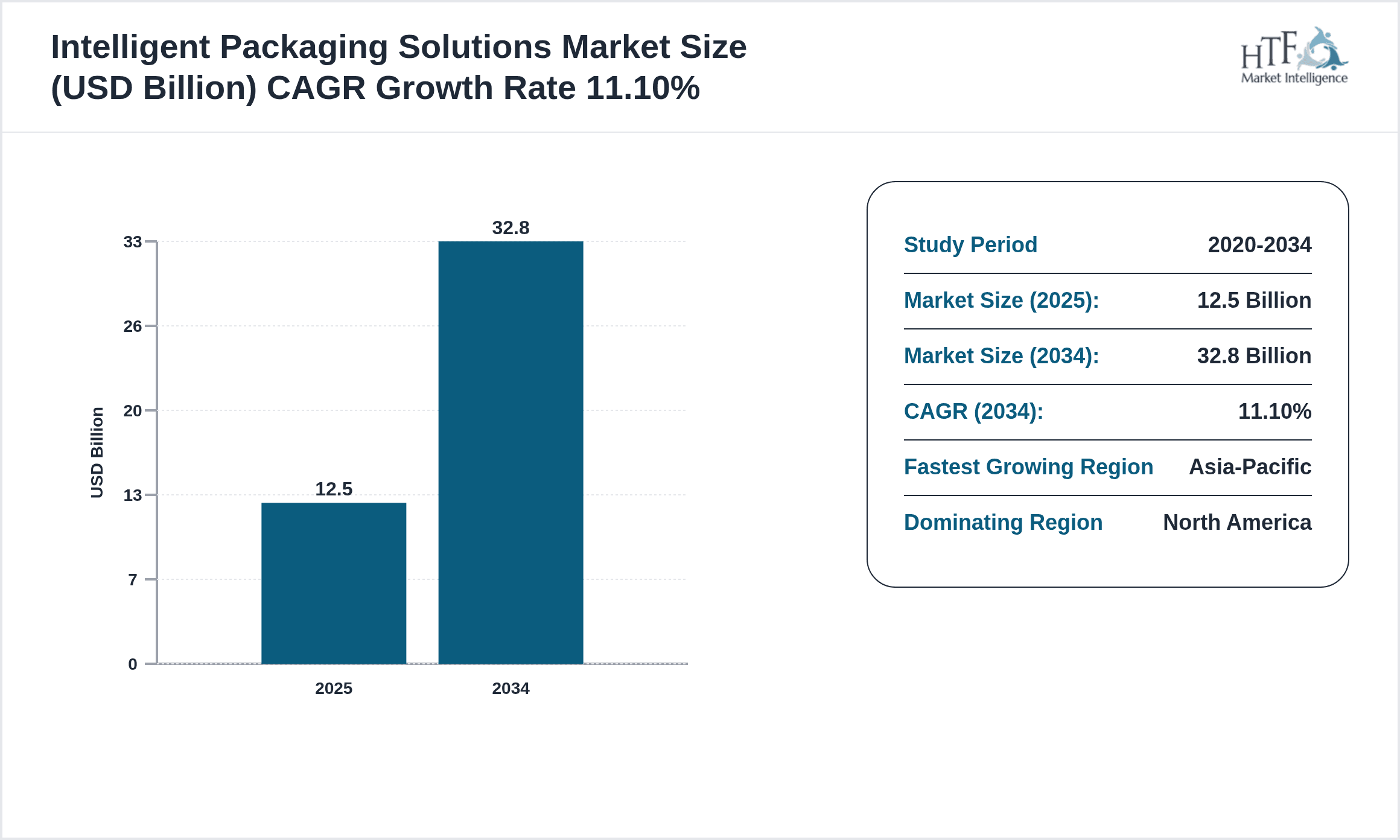
- •Key market highlights include a robust CAGR of 11.1% projected from 2025 to 2034, with the market size expected to exceed USD 32.8 billion by 2034, up from USD 12.5 billion in 2025. North America currently dominates the market with a 35% share, driven by advanced technology adoption and regulatory frameworks supporting product safety and traceability. Asia-Pacific emerges as the fastest-growing region with a CAGR of 14.2%, propelled by rapid industrialization, growing consumer awareness, and increasing investments in smart packaging infrastructure. RFID tags remain the leading product type due to their versatility and widespread application, while sensors and indicators are witnessing the fastest growth owing to their critical role in real-time monitoring and quality assurance. The market is characterized by innovation in packaging materials, integration with IoT devices, and expansion across emerging economies.
- •The strategic importance of intelligent packaging solutions spans diverse industries, providing significant value through enhanced product security, improved supply chain efficiency, and elevated consumer experience. For stakeholders including manufacturers, retailers, and technology providers, these solutions offer competitive advantages by enabling proactive quality management and reducing losses due to spoilage or counterfeiting. The market's growth trajectory is supported by increasing regulatory mandates for product traceability, rising demand for convenience and interactive packaging, and the proliferation of digital technologies. Consequently, intelligent packaging is an essential enabler of sustainable growth and innovation in global packaging markets, representing lucrative opportunities for investment and technological advancement.
Competitive Landscape
The Intelligent Packaging Solutions market is highly competitive, driven by rapid technological innovation and strategic collaborations among key players. Market dynamics are shaped by the adoption of IoT-enabled packaging, enhanced security features, and sustainable materials that differentiate offerings. Companies engage in mergers, acquisitions, and partnerships to expand geographic reach and product portfolios, while investing in R&D to develop advanced sensor technologies and integrated digital platforms. Competitive strategies focus on innovation in miniaturization, energy efficiency, and cost reduction to address diverse end-user requirements. Pricing strategies vary based on technology complexity and application scale, with premium solutions targeting pharmaceuticals and perishable goods. Distribution channels have evolved to include direct sales, e-commerce, and collaborations with packaging manufacturers. Market entry barriers include high capital expenditure and stringent regulatory compliance, yet growth opportunities are abundant in emerging economies with increasing demand for smart packaging. Future trends indicate intensified competition in sensor-based packaging and greater convergence of packaging with digital marketing and consumer engagement tools.
Leading Companies in Intelligent Packaging Solutions Market
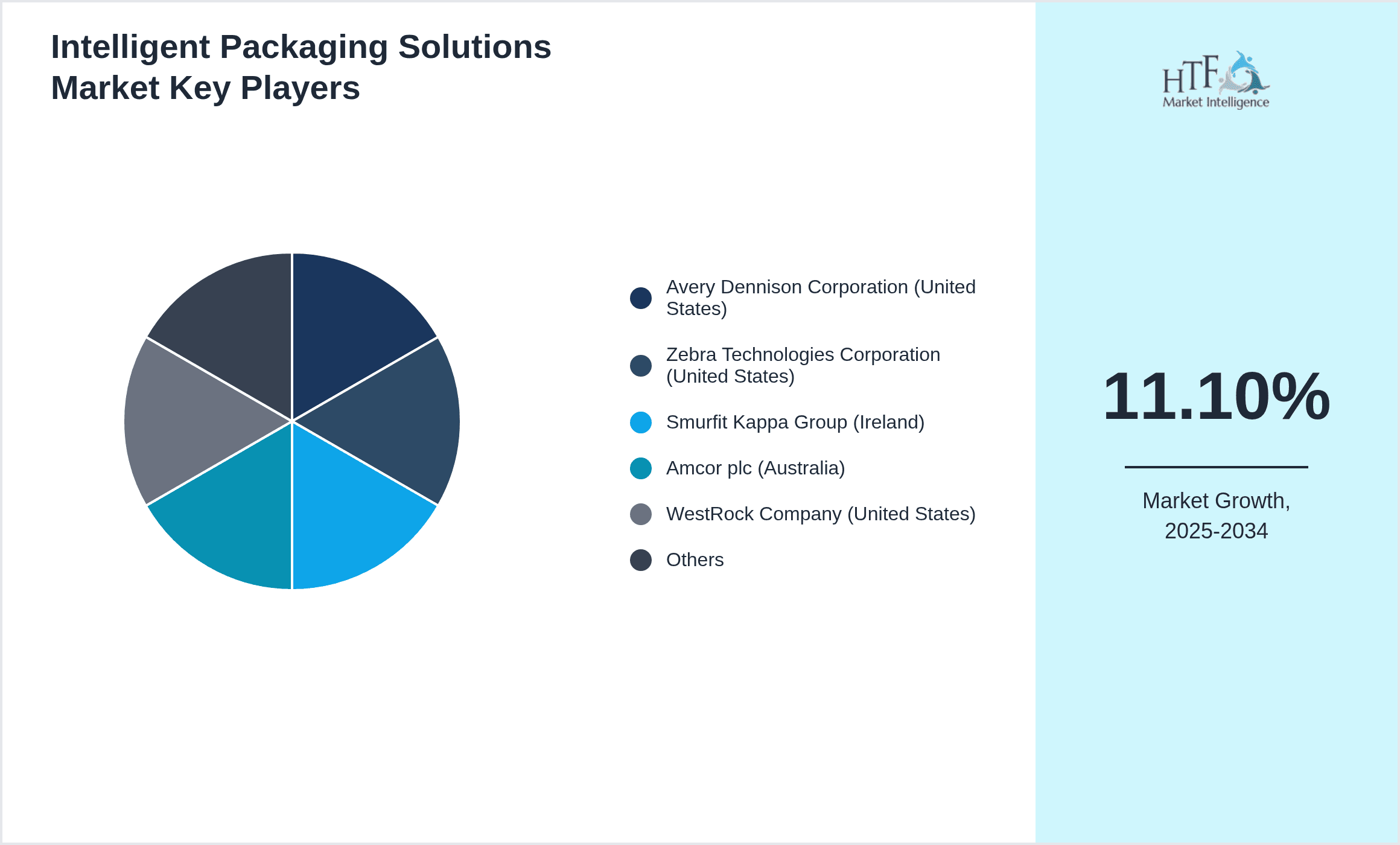
- •Avery Dennison Corporation (United States)
- •Zebra Technologies Corporation (United States)
- •Smurfit Kappa Group (Ireland)
- •Amcor plc (Australia)
- •WestRock Company (United States)
- •Sealed Air Corporation (United States)
- •Thinfilm Electronics ASA (Norway)
- •Identiv, Inc. (United States)
- •3M Company (United States)
- •CCL Industries Inc. (Canada)
- •Smartrac N.V. (Netherlands)
- •Xerafy Technologies Ltd. (Hong Kong)
- •NFC World (United Kingdom)
- •Checkpoint Systems, Inc. (United States)
- •RFID Global Solution (United States)
- •TagSense (United States)
- •Impinj, Inc. (United States)
- •All4Labels Group (Germany)
- •Logopak Systeme GmbH (Germany)
- •Nexgen Packaging Technologies (India)
- •SATO Holdings Corporation (Japan)
- •Thinfilm Electronics ASA (Norway)
- •Linxens (France)
- •Smurfit Kappa Group (Ireland)
- •Printec Group (United States)

Market Breakdown
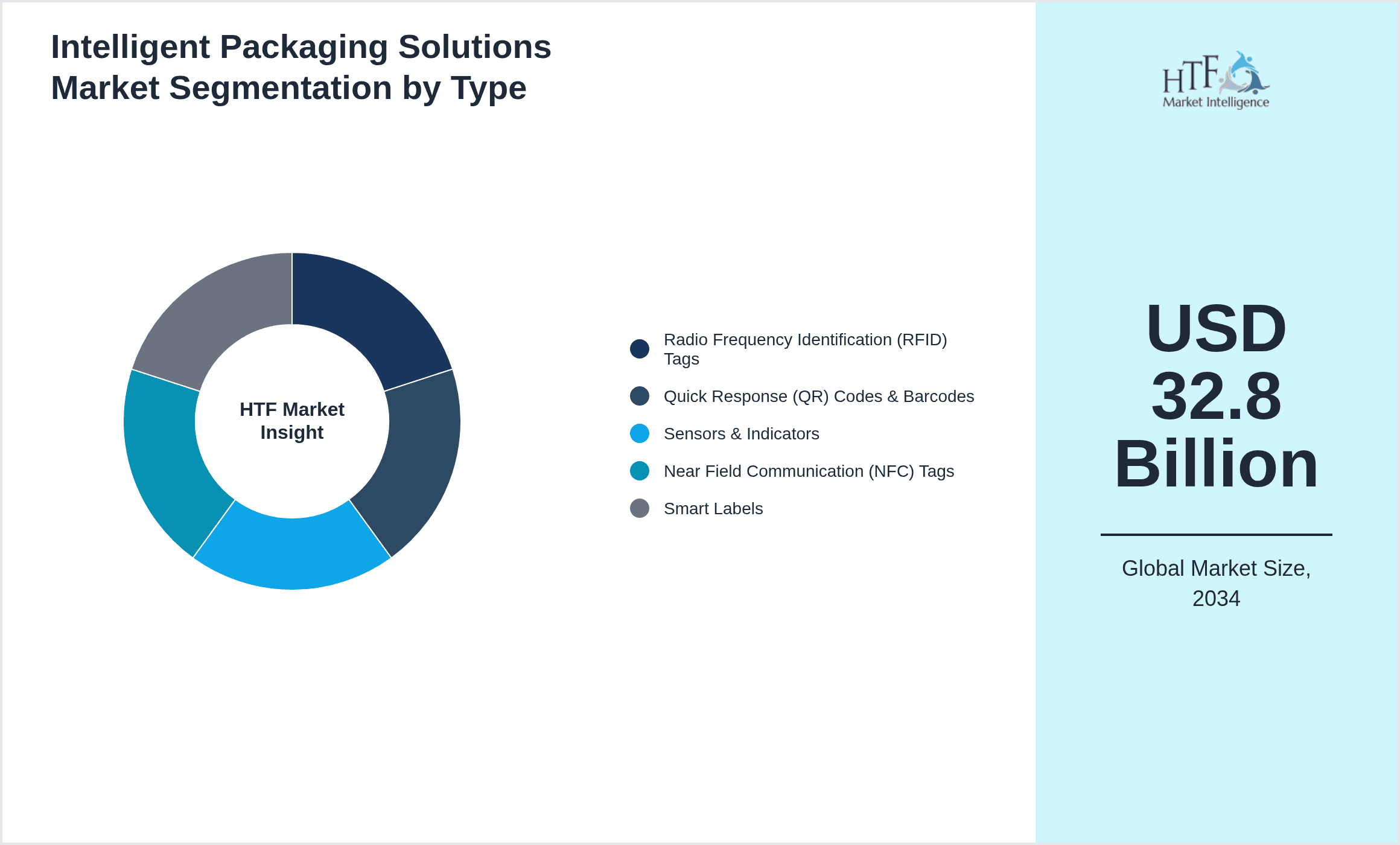
- •By Product Type
- ◦Radio Frequency Identification (RFID) Tags
- ◦Quick Response (QR) Codes & Barcodes
- ◦Sensors & Indicators
- ◦Near Field Communication (NFC) Tags
- ◦Smart Labels
- •By Application
- ◦Food & Beverage
- ◦Healthcare & Pharmaceuticals
- ◦Consumer Goods
- ◦Logistics & Supply Chain
- ◦Electronics
- •By Service Type
- ◦Design & Consulting Services
- ◦Implementation & Integration
- ◦Maintenance & Support
- ◦Data Analytics & Monitoring
- •By Deployment Model
- ◦Cloud-based
- ◦On-premise
- ◦Hybrid
Growth Dynamics
- •Increasing demand for enhanced product traceability across supply chains is driving the adoption of intelligent packaging solutions, especially in regulated industries such as pharmaceuticals and food where safety and authenticity are critical.
- •Technological advancements in sensor miniaturization and integration with IoT platforms allow real-time monitoring of environmental conditions, thus improving product quality and reducing waste during transportation and storage.
- •Rising consumer preference for interactive and personalized packaging experiences encourages brands to incorporate smart labels and NFC technologies, fostering stronger engagement and brand loyalty.
- •Government regulations mandating enhanced packaging safety and anti-counterfeiting measures promote market growth by compelling manufacturers to adopt intelligent packaging technologies.
- •Expanding e-commerce and global supply chain complexity necessitate robust tracking and authentication solutions, which intelligent packaging efficiently addresses, thereby boosting its market penetration.
- •Increasing investments in R&D and strategic collaborations among industry players accelerate product innovation and expand the portfolio of intelligent packaging offerings.
- •Sustainability initiatives emphasizing waste reduction and recyclability are encouraging the development of eco-friendly intelligent packaging materials compatible with smart technologies.
Market Trends
- •The integration of blockchain technology with intelligent packaging is gaining traction, enabling immutable product provenance and enhancing consumer trust through transparent supply chains.
- •Adoption of biodegradable and recyclable smart packaging materials is on the rise, aligning with growing environmental concerns and regulatory pressure to reduce plastic waste.
- •Digital watermarks and invisible codes embedded in packaging are emerging as innovative authentication methods that do not alter the packaging design but provide secure tracking capabilities.
- •The use of AI-driven analytics on data collected from intelligent packaging sensors is enabling predictive quality control and inventory optimization for manufacturers and retailers.
- •Collaborations between packaging manufacturers and technology firms are fostering the development of multifunctional smart packaging solutions that combine protection, communication, and analytics.
- •Wearable and flexible sensors integrated within packaging are expanding the scope of intelligent packaging to new applications such as health monitoring and personalized consumer feedback.
- •Increasing deployment of NFC-enabled packaging in the luxury goods sector enhances anti-counterfeiting measures and provides immersive consumer experiences through digital content access.
Market Opportunities
- •Expanding demand for smart packaging in emerging economies presents significant growth opportunities due to increasing consumer awareness and modernization of supply chains in these regions.
- •Untapped applications in the pharmaceutical industry, particularly for vaccine and biologics tracking, offer promising avenues for intelligent packaging adoption and innovation.
- •Investment in eco-friendly intelligent packaging solutions offers competitive advantage as consumers and regulators increasingly favor sustainable product packaging.
- •Integration of intelligent packaging with mobile applications enables brands to establish direct communication channels with end-users, enhancing marketing effectiveness and customer loyalty.
- •Collaborations between packaging firms and IoT platform providers facilitate the development of comprehensive smart packaging ecosystems, expanding functionality and market reach.
- •Advancements in sensor technology to monitor freshness and spoilage in perishable goods open new market segments in the food and beverage industry.
- •Government incentives for adopting anti-counterfeit technologies in regulated sectors create favorable conditions for intelligent packaging market expansion.
Market Challenges
- •High initial investment and implementation costs for intelligent packaging technologies limit adoption among small and medium enterprises, especially in cost-sensitive markets.
- •Complexity in integrating intelligent packaging systems with existing supply chain infrastructure poses operational challenges and requires specialized expertise.
- •Concerns related to data security and privacy in IoT-enabled packaging solutions necessitate robust safeguards, which may delay widespread implementation.
- •Lack of standardized protocols and interoperability among different intelligent packaging technologies restrict seamless adoption and scalability.
- •Limited consumer awareness and understanding of intelligent packaging benefits can hinder market growth and acceptance in certain regions.
- •Regulatory uncertainties and varying compliance requirements across regions increase complexity for global market players.
- •Durability and reliability issues of sensors and electronic components under different environmental conditions affect product performance consistency.
Regulatory Framework
- •The U.S. Food and Drug Administration (FDA) introduced updated packaging safety regulations between 2020 and 2025 requiring enhanced traceability and tamper-evident features, significantly impacting intelligent packaging adoption in healthcare and food sectors.
- •The European Union’s Packaging and Packaging Waste Directive (PPWD) revisions enforced from 2021 emphasize sustainability and recyclability standards, encouraging the use of eco-friendly intelligent packaging solutions.
- •China implemented the National Food Safety Standard in 2023 mandating smart labeling for perishable goods to improve consumer safety and supply chain transparency, driving market growth in the Asia-Pacific region.
- •Japan’s Pharmaceutical and Medical Device Act revisions between 2020 and 2024 introduced stricter serialization and anti-counterfeiting packaging requirements, boosting demand for RFID and sensor-based intelligent packaging.
- •Government initiatives such as the U.S. Smart Packaging Act 2022 promote innovation through funding and incentives for integrating IoT technologies in packaging, fostering market expansion and technological advancements.
Market Intelligence
- •15th January 2025, Avery Dennison Corporation launched an advanced RFID-enabled smart label platform designed for the healthcare industry, featuring enhanced durability and integration with cloud-based analytics. This platform aims to improve pharmaceutical traceability and combat counterfeit drugs effectively, leveraging real-time data collection and remote monitoring capabilities. The solution supports compliance with global regulatory standards and addresses growing concerns over supply chain integrity. Avery Dennison’s initiative is expected to strengthen its position in the intelligent packaging market by offering scalable and customizable options for diverse applications. Source: Avery Dennison Official Press Release
- •23rd March 2025, Thinfilm Electronics ASA introduced a new generation of printed sensors capable of detecting temperature and humidity variations in perishable goods packaging. These sensors utilize flexible electronics technology, enabling seamless integration into existing packaging materials without compromising recyclability. The innovation enhances product freshness monitoring and reduces food waste by providing accurate environmental data throughout the supply chain. Thinfilm’s advancement is poised to disrupt the food and beverage packaging segment by delivering cost-effective and sustainable intelligent packaging solutions. Source: Thinfilm Electronics Press Release
- •10th May 2024, Smurfit Kappa Group announced a strategic partnership with an IoT platform provider to develop integrated intelligent packaging solutions combining smart labels and data analytics. The collaboration focuses on delivering end-to-end packaging services that enable real-time supply chain visibility and improved consumer engagement through interactive packaging experiences. This initiative aligns with Smurfit Kappa’s sustainability goals by incorporating recyclable materials and reducing packaging waste. The partnership is expected to accelerate intelligent packaging adoption across Europe and North America. Source: Smurfit Kappa Corporate News
- •28th August 2024, Zebra Technologies Corporation completed the acquisition of a leading NFC technology firm to expand its product portfolio in intelligent packaging solutions. The acquisition enhances Zebra’s capabilities in contactless communication and consumer engagement, supporting industries such as retail and logistics in implementing advanced tracking and authentication features. This strategic move consolidates Zebra’s market leadership and positions it to capitalize on growing demand for smart packaging worldwide. Source: Zebra Technologies Investor Relations
Regional Outlook
The North America currently holds a significant share of the market, primarily due to several key factors: increasing consumption rates, a burgeoning population, and robust economic momentum. These elements collectively drive demand, positioning this region as a leader in the market. On the other hand, Asia-Pacific is rapidly emerging as the fastest-growing area within the industry. This remarkable growth can be attributed to swift infrastructure development, the expansion of various industrial sectors, and a marked increase in consumer demand. These dynamics make this region a crucial player in shaping future market growth.
In our report, we cover a comprehensive analysis of the following regions and countries:
- North America
- LATAM
- West Europe
- Central & Eastern Europe
- Northern Europe
- Southern Europe
- East Asia
- Southeast Asia
- South Asia
- Central Asia
- Oceania
- MEA
| Feature | Details |
|---|---|
| Base Year Market Size | USD 12.5 Billion |
| Forecast Year Market Size | USD 32.8 Billion |
| CAGR | 11.1% |
| Forecast Period | 2026 to 2033 |
| YoY Growth | 11% |
| Scope of Report | Market is segmented by Product Type (Radio Frequency Identification (RFID) Tags, Quick Response (QR) Codes & Barcodes, Sensors & Indicators, Near Field Communication (NFC) Tags, Smart Labels), Application (Food & Beverage, Healthcare & Pharmaceuticals, Consumer Goods, Logistics & Supply Chain, Electronics), Service Type (Design & Consulting Services, Implementation & Integration, Maintenance & Support, Data Analytics & Monitoring), Deployment Model (Cloud-based, On-premise, Hybrid) |
| Regions Covered | North America, LATAM, West Europe, Central & Eastern Europe, Northern Europe, Southern Europe, East Asia, Southeast Asia, South Asia, Central Asia, Oceania, MEA |
| Key Companies | Avery Dennison Corporation (United States), Zebra Technologies Corporation (United States), Smurfit Kappa Group (Ireland), Amcor plc (Australia), WestRock Company (United States), Sealed Air Corporation (United States), Thinfilm Electronics ASA (Norway), Identiv, Inc. (United States), 3M Company (United States), CCL Industries Inc. (Canada), Smartrac N.V. (Netherlands), Xerafy Technologies Ltd. (Hong Kong), NFC World (United Kingdom), Checkpoint Systems, Inc. (United States), RFID Global Solution (United States), TagSense (United States), Impinj, Inc. (United States), All4Labels Group (Germany), Logopak Systeme GmbH (Germany), Nexgen Packaging Technologies (India), SATO Holdings Corporation (Japan), Thinfilm Electronics ASA (Norway), Linxens (France), Smurfit Kappa Group (Ireland), Printec Group (United States) |
Global Intelligent Packaging Solutions Market Size, Growth & Revenue 2025-2034 - Table of Contents
Frequently Asked Questions (FAQ):
The Compact Track Loaders market is expected to see value worth 5.3 Billion in 2025.
North America currently leads the market with approximately 45% market share, followed by Europe at 28% and Asia-Pacific at 22%. The remaining regions account for 5% of the global market.
Key growth drivers include increasing construction activities, rising demand for versatile equipment in agriculture, technological advancements in track loader design, and growing preference for compact equipment in urban construction projects.